I have a thirteen year old daughter. Consent is an essential concept for her to both learn and understand. I recently came across this short educational video and it does an excellent job of explaining it in simple terms, so I thought I would share it with you. Most adults would benefit from watching it too.
Author: breath.by.breath
Learning to live an awake and authentic life, one breath at a time.
Codependency & Over-Functioning
What does it mean to function optimally in life? It means showing up in every area of your life without overpromising or doing more than your share. You get things done, you follow through, you keep your word, and you are clear about what is and is not your responsibility. You have enough time to take care of yourself and you know your limits. You know when to ask for help or support and feel comfortable doing so. You are not regularly doing more than what is required to accomplish your goals.
High-functioning codependency is behaviour that includes disordered boundaries, where you are overly invested in the feeling states, the decisions, the outcomes, and the circumstances of the people in your life to the detriment of your internal peace and wellbeing.
A high-functioning codependent is often smart, successful, reliable, and accomplished. They can do it all. But what is the cost? Over-functioning leaves a person burnt out and exhausted from trying to maintain an impossible workload and keep all of the balls in the air.
If you identify as an over-functioner, it is important to get really clear about what is your responsibility, and what is not. When you take responsibility for things that are not your own, you are overstepping a boundary. At its core, codependent behaviour is a bid for control. Even if your heart is well intentioned, if your actions are driven by fear, you are not giving from a place of love and fulfillment.
Joy Journal
Joy Journal #19: June 25, 2022

For Paul Cézanne, there would have been no great painting, perhaps no painting at all, without the landscape of Provence. Cézanne has come to represent many things in art history — harbinger of modernism, proto-cubist, terminator of classical styles and preoccupations; but he was first and foremost a painter of several hundred hectares of rugged, sun-drenched earth in and around Aix-en-Provence.
In the early 1890s, after years of moving back and forth between Provence and areas in and around Paris, Cézanne began spending more and more time in Aix and environs, rediscovering his most important and reliable sources of inspiration. Around the middle of that decade, he launched what his biographer Alex Danchev describes as “the greatest period of late painting since Rembrandt.” He spent much of that time painting in Le Tholonet.
A persistent object of his attention was the ancient quarry at Bibémus, located a kilometre or so northwest of the village centre. Quarrying began there in Roman times and continued until 1885, roughly ten years before Cézanne started painting at the site. The relative isolation and solitude of Bibémus were undoubtedly attractive to him, as were the stunning rock formations, products of ancient geological forces and more recent centuries of excavation and cutting. But it was especially the colours in the quarry — complicated shades of ochre in the rock and the greens of the quarry’s trees and shrubs — that captured his imagination.

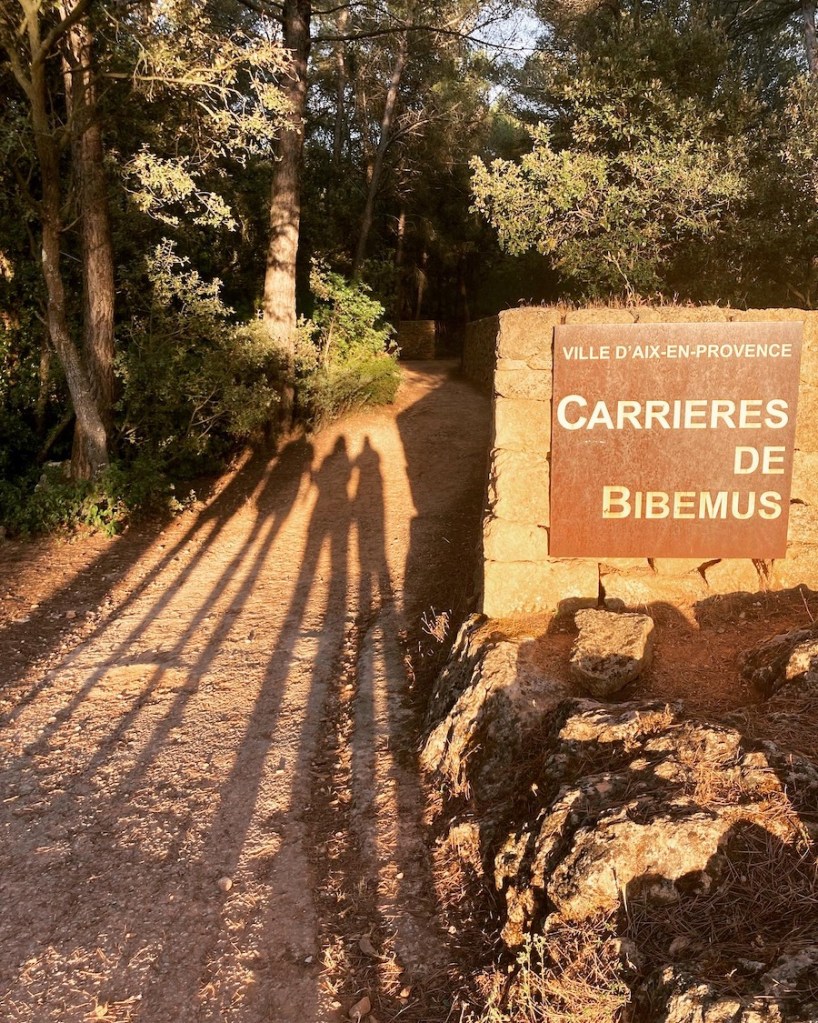
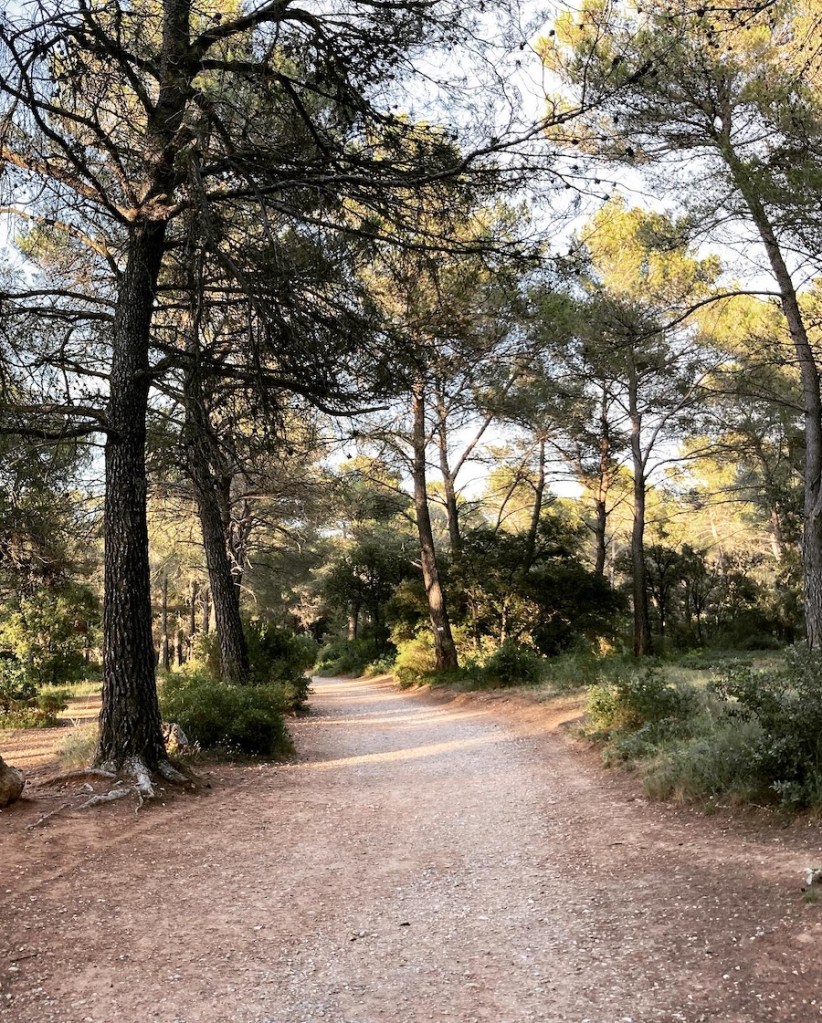
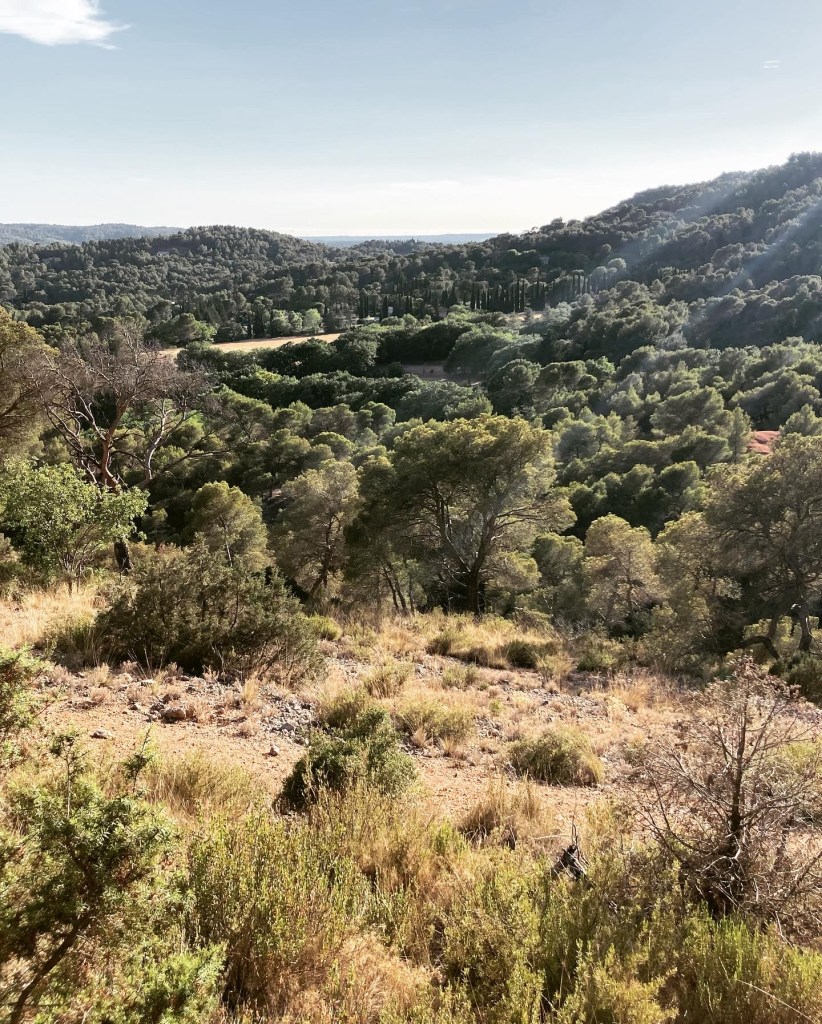
One warm summer evening in June, I spent several hours exploring this exquisite area, retracing the steps of the painter with a small group of hikers. Starting at Le Tholonet, we entered the Parc Départemental de Roques–Hautes, and walked until we came upon the Bibémus plateau. With a panoramic view of the limestone ridge of Montagne Sainte-Victoire, the air was fragrant with thyme, rosemary, lavender, pine and mint; and we were surrounded by the chirping of cicadas.
As we eventually descended into the village, dusk fell upon the valley, and pink and purples hues filled the sky. Live music rose from the festival stage on the pétanque court below, beckoning us closer. Darkness fell upon the valley, and we joined the crowd gathered under the broad plane trees and bright stars, soaking up the beautiful evening together. #JoyBlogging
Something to Inspire

“Instead of asking ourselves, ‘How can I find security and happiness?’ we could ask ourselves, ‘Can I touch the center of my pain? Can I sit with suffering, both yours and mine, without trying to make it go away? Can I stay present to the ache of loss or disgrace—disappointment in all its many forms—and let it open me?'”
~ Practicing Peace by Pema Chödrön
Things I Love: Together Rising
Glennon Doyle is the author of the #1 New York Times bestseller Untamed, which has sold over two million copies. An activist and “patron saint of female empowerment” (People), Glennon hosts the We Can Do Hard Things Podcast. She is the founder and president of Together Rising, an all-women-led nonprofit organization that has revolutionized grassroots philanthropy – raising over $45 million for women, families, and children in crisis.
Established in 2012, Together Rising helps by running time-limited fundraisers (called Love Flash Mobs) to meet urgent local and global community needs in a matter of hours. Whether it’s pulling children out of the sea outside the refugee camps in Greece, helping abandoned kids on the streets in Indianapolis, establishing the first opioid recovery home for pregnant teens in New Hampshire, building a maternal health wing in Port-au-Prince, providing a single mother access to breast cancer treatment, or keeping a foster family’s heat on in Texas—Together Rising identifies what is urgently required and delivers funding support to the people and organizations who are most effectively addressing that critical need.
Joy Journal
Joy Journal #18: October 14, 2022
I just spent ten days in Mexico visiting my step-dad, Bob. He lives in a small community in the countryside located outside of San Miguel de Allende: a city in Mexico’s central highlands, known for its baroque Spanish architecture, thriving arts scene and cultural festivals. In the city’s historic, cobblestoned centre lies a famous neo-Gothic church, Parroquia de San Miguel Arcángel, whose dramatic pink towers rise above the main plaza, El Jardín.
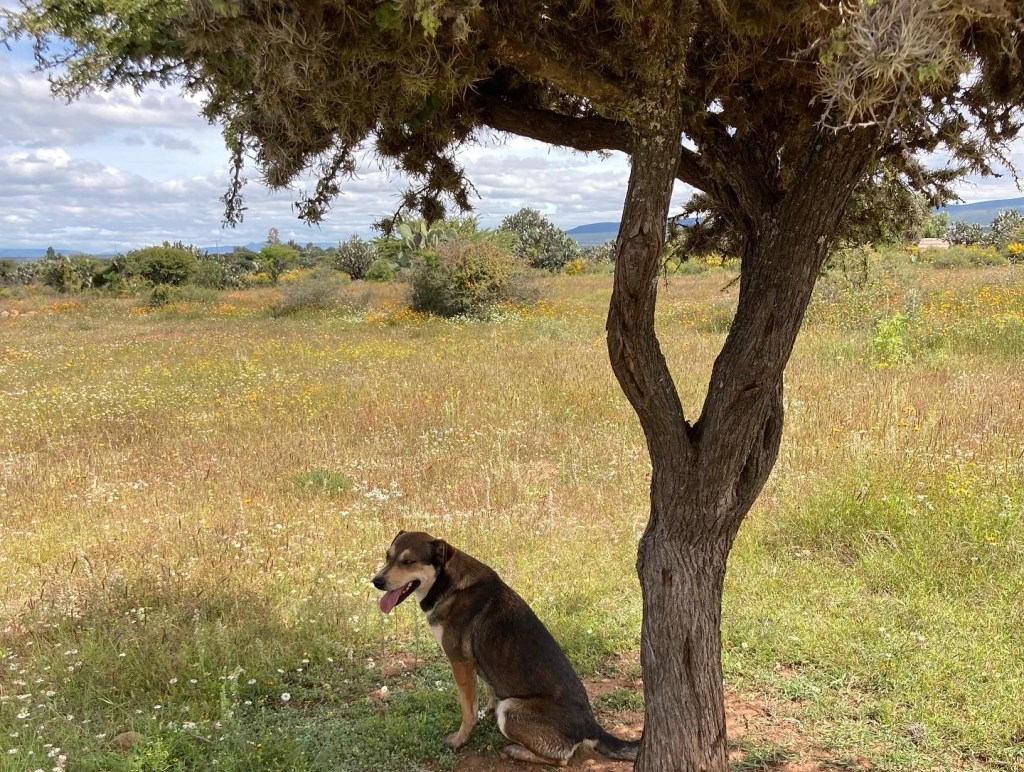
We enjoyed a lovely, quiet visit together, with a daily routine consisting of morning walks in the countryside with the dogs, afternoons of reading and writing, and evenings filled with good meals and movies. October is a particularly beautiful time to visit Mexico, as the rainy season is coming to an end, and the vegetation is lush and bright.

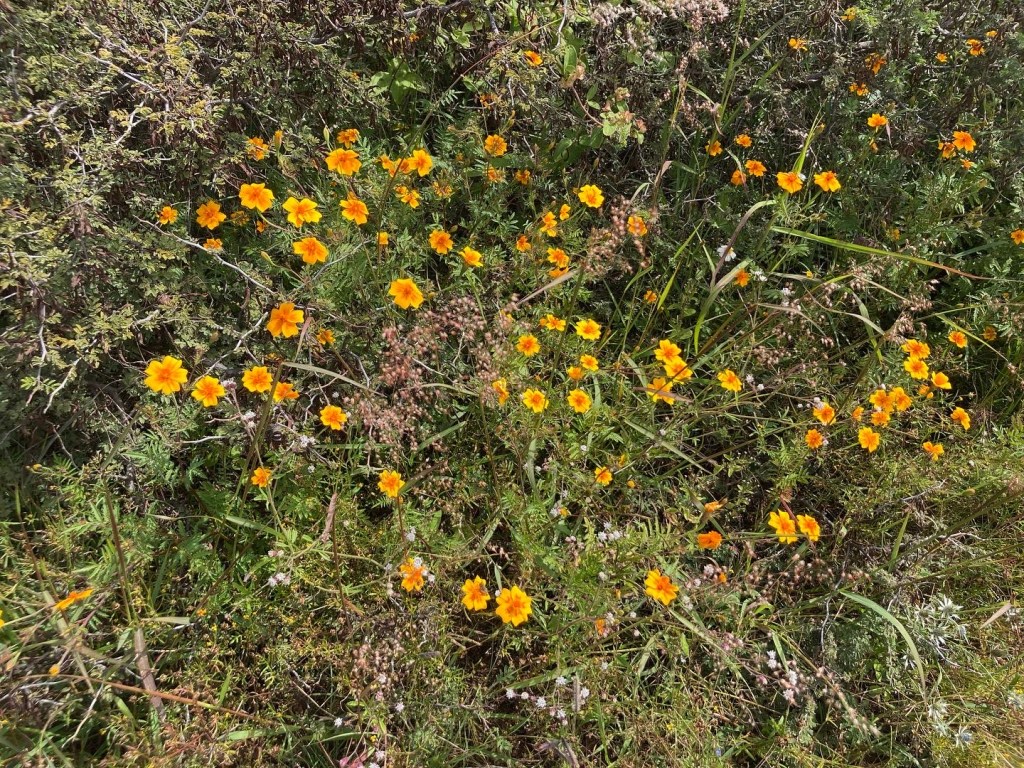
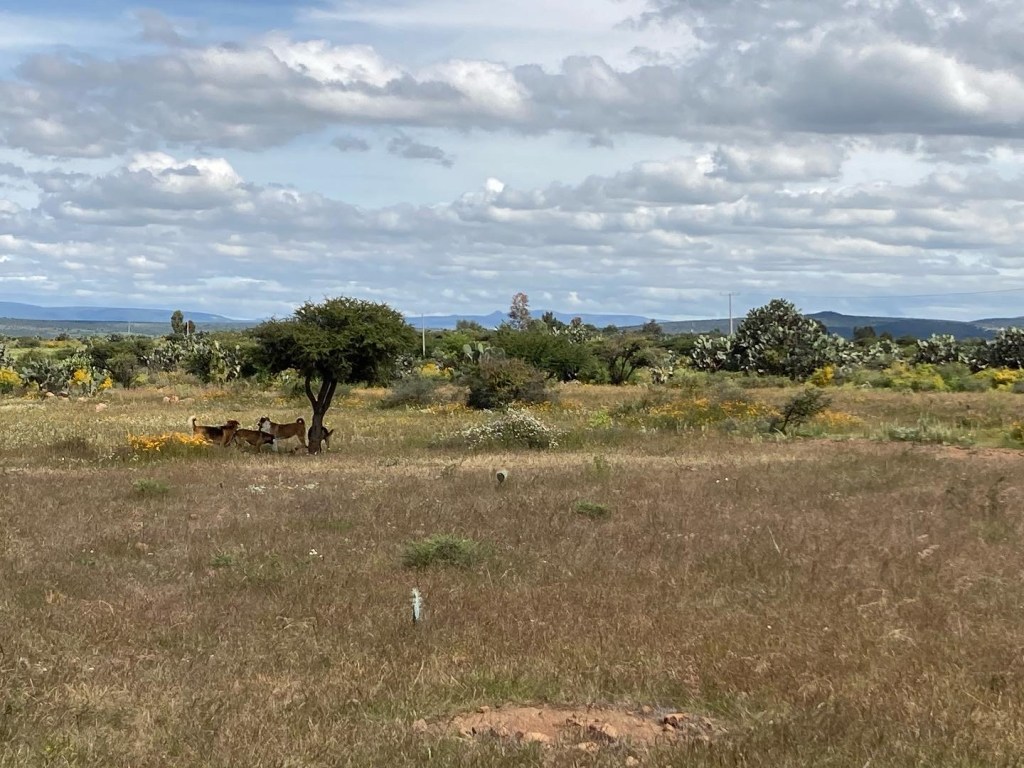

A highlight of our the experience was learning about the local cuisine together. During my visit, Bob and I enjoyed a number of cooking lessons, and I learned how to make authentic guacamole, quesadilla, enchiladas verdes and chile relleno. It was such a privilege to be taught many of these family recipes from Alicia, who grew up in the local area. Food is a beautiful way to meaningfully connect and experience a culture. #JoyBlogging


Something to Inspire

I am making a home inside myself.
A shelter of kindness where everything is forgiven, everything allowed—
a quiet patch of sunlight to stretch out without hurry,
where all that has been banished and buried is welcomed,
spoken, listened to—released.

A fiercely friendly place I can claim as my very own.
I am throwing my arms open
to the whole of myself—                                                                                                                                                                 especially the fearful, fault-finding, falling apart, unfinished parts,                                                                                                                                  knowing every seed and weed, every drop of rain, has made the soil richer.

I will light a candle, pour a hot cup of tea,                                                                                                                                       gather around the warmth of my own blazing fire.                                                                                                                                  I will howl if I want to, knowing this flame can burn through
any perceived problem, any prescribed perfectionism,
any lying limitation, every heavy thing.

I am making a home inside myself
where grace blooms in grand and glorious abundance,
a shelter of kindness that grows
all the truest things.
Watch List: “Dark Waters”
I recently watched the 2019 film, “Dark Waters.” It dramatizes Robert Bilott‘s landmark case against the chemical manufacturing corporation DuPont after they contaminated a town with unregulated chemicals.
The film is based on the New York Times Magazine article “The Lawyer Who Became DuPont’s Worst Nightmare” by Nathaniel Rich. I love a movie that showcases the bravery of regular people and demonstrates how one tenacious person can make a huge difference. It is definitely worth watching.
Heart Centered Learning: The Myth of Ethical Consumerism

“…Even though it’s mostly progressives who identify as Ethical Consumers, as Teachout illuminates, making change through the way we shop is ultimately a right-wing idea. We’ve fully embraced the neoliberal system and worldview that change should happen through the marketplace. Conservatives are the ones who think the best solutions to social problems as market solutions, and have fought historically-progressive strategies to tackle social and environmental problems such as government regulation, public spending, better education, social programs, and trade pacts that protect human rights and the environment both here and abroad. Ethical Consumption may have started out 30 years ago as a byproduct of our powerlessness in the neoliberal era, but somewhere along the way we bought into it…
…But I think it’s self-evident that Ethical Consumerism is a grossly inadequate and unequal response to our most pressing problems, like the climate crisis, systemic racism, sweatshop wages, growing inequality, and so on. Moreso, I’m convinced these problems are in large part created by unchecked corporate power, unregulated capitalism, and our weakened democracy that Ethical Consumers help prop up. Fashion is a perfect example: What drives sweatshops is not a consumer demand for sweatshops. It is a lack of proper labor laws to protect garment workers and intense economic concentration that incentivizes the industry to drive down wages. The best solution to this problem is to nurture our democracy and return to the progressive and strong mass movements of the past that provide a counterweight to the market’s crushing power…
…But where we get ourselves into trouble is in viewing shopping as a moral act—and viewing shopping at a cheap chainstore that has poor business practices as an immoral one. Consumption is an economic imperative (there’s no escaping it under capitalism), and it is fundamentally determined by our income. Unless we believe that rich people, who can afford more ethical products, are somehow more ethical than the rest of us, we must confront that it’s unacceptable and arguably deeply unethical itself to ever tie human “goodness” to what we buy. In fact, I now believe that the only ethical approach to consumption (if such a thing exists) is to make the cheapest available products as responsibly as possible, as was recently argued in The Guardian, which means overhauling the big companies that make most of the stuff that most people buy….
…None of this is easy. Learning how to get involved in real political movements means learning entirely new skills (Eitan Hersh’s book Politics Is for Power is a great starter guide) and requires reinvigorating our broken political system, the rewards of which require patience. And Ethical Consumption is second nature to many of us. Recently, when I posted about PayUp Fashion, our new phase of the #PayUp campaign in the Consumer Activist tradition of calling for systemic reform of corporate fashion, including new laws and regulations to create living wages for all garment workers, a colleague responded, “This is why we need to support small business.” We still cling to the hope that we just need to expand our ranks. Likewise, when Everlane’s workers tried to unionize earlier this year, the Instagram comments were mostly some variation of, “I won’t be shopping there again.” A more powerful strategy, the public strategy, would be to find ways to support organized labor across the retail sector…
…When in doubt, think like a Consumer Activist. Rather than give up plastic to-go cups, Consumer Activists would work together to ban single-use plastics, investigate the plastic industry’s influence over American government, and push our government to propose a low-carbon national policy that undercuts the plastic lobby’s clout. Rather than buy organic food, they’d call to better regulate the petrochemical industry, build new social programs to support sustainable farming, and work to ban toxins. And rather than boycott Amazon or delete Instagram, we’d realize our own antitrust laws should’ve never allowed these platforms to have this much control to begin with…
~ Excerpted from The Twilight of the Ethical Consumer by Elizabeth Cline.
Groundless Ground
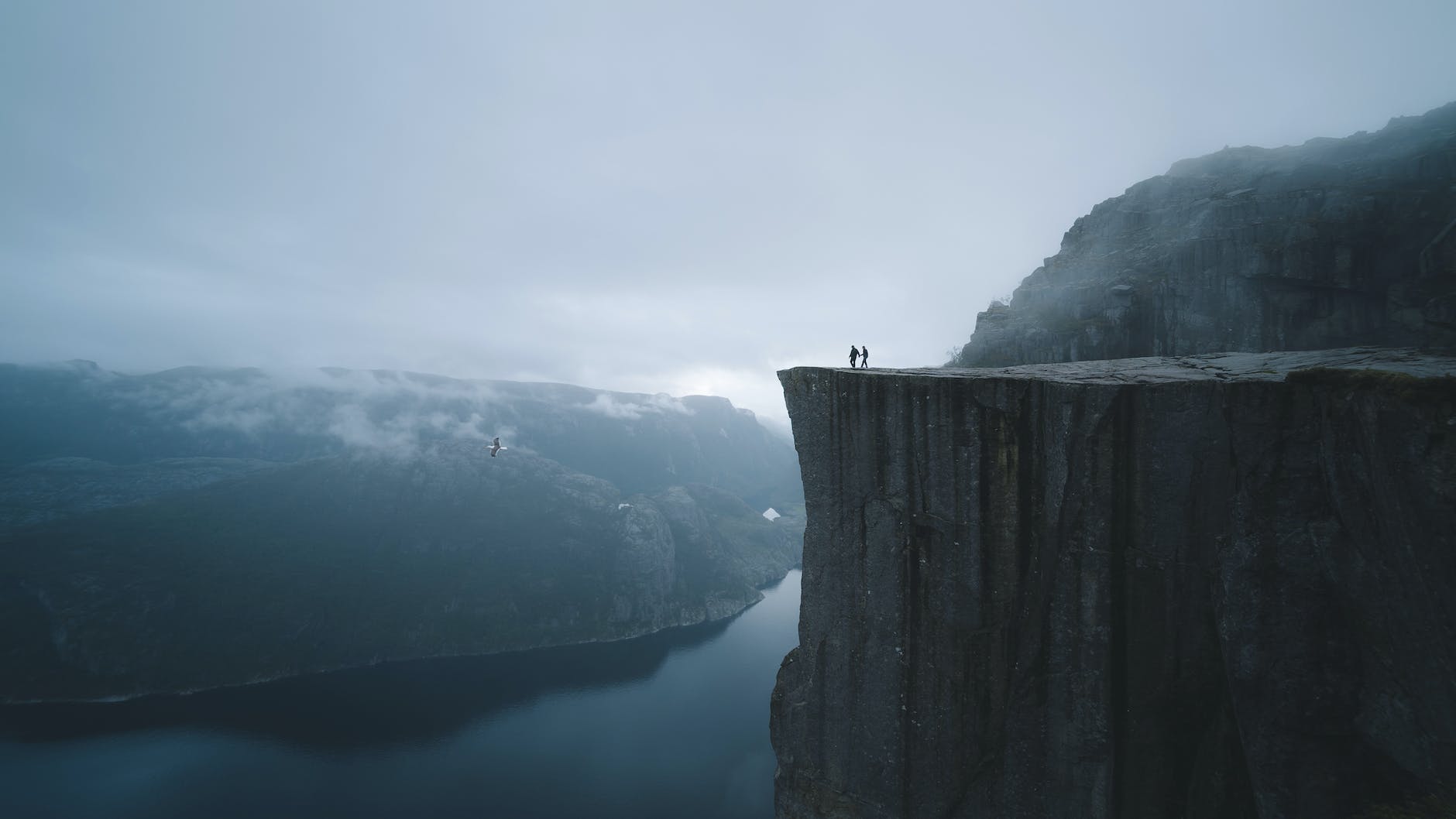
I stumble along a cliff's edge
blindfolded.
Tracing its rocky border,
I gauge one step,
and then the next.
My arms
grasp at thin air.
I have spent a lifetime
creeping
fearfully
along.

Until one day
a question emerges.
What if?
What if there is no edge,
no cliff,
no ladder to climb?
What if
there is no ground?
What if?

The quest for certainty
and stability
and permanence
is a lie?
What if
the point is not
to cling to the edge
but to lean further forward
and fly?
Joy Journal
Joy Journal #17: June 30, 2022
One evening while living in Aix, I was walking in my neighbourhood, and I happened across a little gallery opening taking place on a tiny side street. It was hosted by two Aixois artists at their studio, Espace Mer. The opening was mostly attended by friends and family, but they welcomed me in, and eagerly showed me their work. I ended up purchasing some beautiful jewellery pieces from one of the artists, Raphaëlle D’Auxerre.
During our conversation, I learned that Raphaëlle taught yoga classes at a local studio, Atelier 8, and she invited me to join her later that week. It was the start of a lovely friendship. Throughout the month of June, I attended Raphaëlle’s evening classes in a cosy pottery studio, located in an eighteenth century building, with two other students. We practised a mixture of hatha, vinyassa and chanting. Through the intimacy of the space, and the intention of the practice, Raphaëlle created a powerful energetic experience for us all to share.
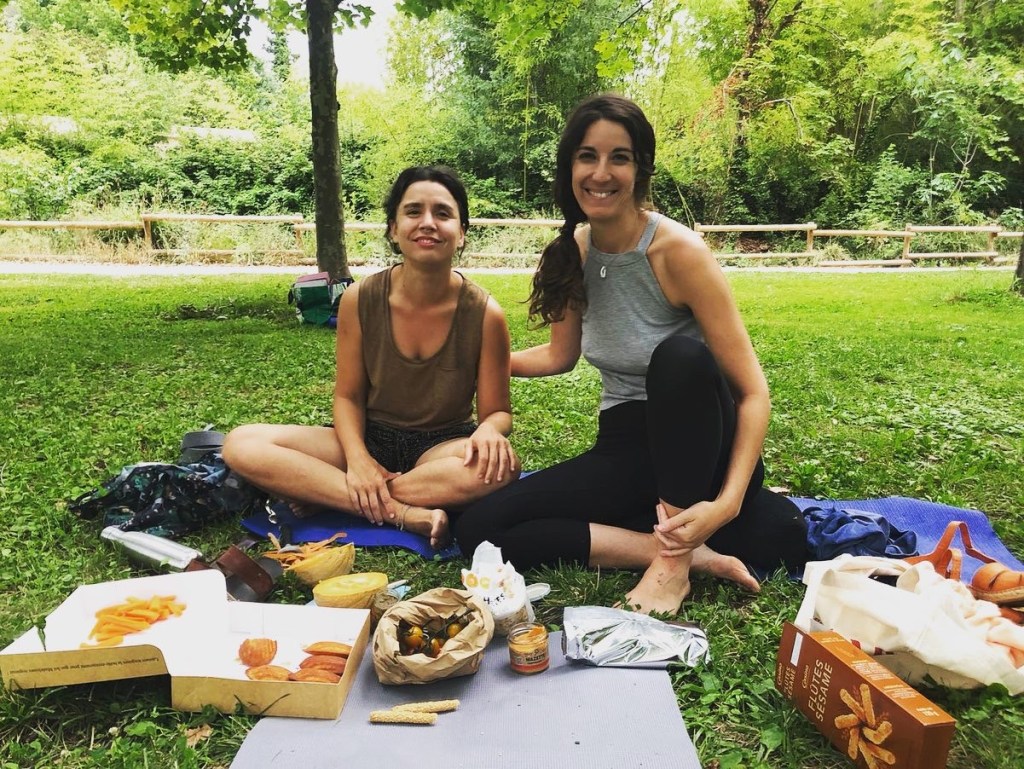
As the weather grew warmer, Raphaëlle moved our class out to a local park, Promenade de la Torse; and during our first evening together, she invited us gather for a small picnic in celebration of the start of summer. As I sat there on my mat, on that warm provençal evening, sharing conversation, laughter, and a meal with these lovely French women, I was reminded that no matter where I travel in the world, I can locate community and friendship through pursuing my passion for the arts and yoga. What an incredible gift. #JoyBlogging

Something to Inspire

“My hesitancy in speech, which was once an annoyance, is now a pleasure. Its greatest benefit has been that it has taught me the economy of words. I have naturally formed the habit of restraining my thoughts. And I can now give myself the certificate that a thoughtless word hardly ever escapes my tongue or pen. I do not recollect ever having had to regret anything in my speech or writing. I have thus been spared many a mishap and waste of time. Experience has taught me that silence is part of the spiritual discipline of a votary of truth. Proneness to exaggerate, to suppress or modify the truth, wittingly or unwittingly, is a natural weakness of man, and silence is necessary in order to surmount it. A man of few words will rarely be thoughtless in his speech; he will measure every word.”
~ Mahatma Gandhi, Gandhi: An Autobiography
 Breath by Breath