Something to Inspire

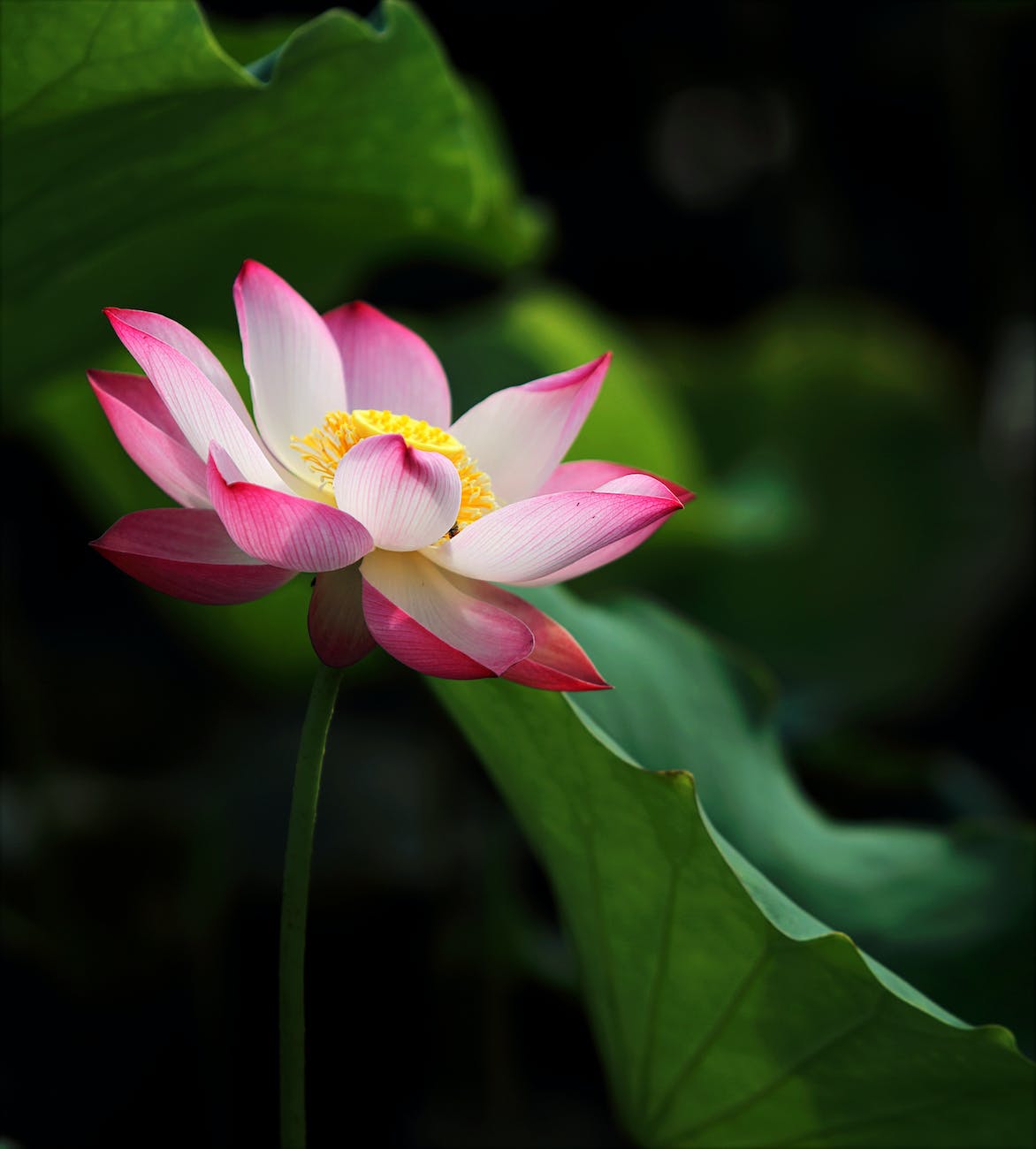
Photo by Pixabay on Pexels.com

“Tonglen practice has to do with cultivating fearlessness. When you do this practice for some time, you experience your heart as more open. You begin to realize that fear has to do with wanting to protect your heart: you feel that something is going to harm your heart, and therefore you protect it. Again and again, in the Buddhist teachings, in the Shambhala teachings, and in any tradition that teaches us how to live well, we are encouraged to cultivate fearlessness. How do we do that? Certainly the sitting practice of meditation is one way, because through it we come to know ourselves so completely and with such gentleness.”

Excerpted from: Awakening Loving-Kindness by Pema Chödrön, pgs 113–114.

Something to Inspire

Calling All Grand Mothers

We have to live
differently
or we
will die
in the same
old ways.
 
Therefore
I call on all Grand Mothers
everywhere
on the planet
to rise
and take your place
in the leadership
of the world.
 
Come out
of the kitchen
out of the
fields
out of the
beauty parlors
out of the
television.
 
Step forward
& assume
the role
for which
you were
created:
To lead humanity
to health, happiness
& sanity.

I call on
all the
Grand Mothers
of Earth
& every person
who possesses
the Grand Mother
spirit
of respect for
life
&
protection of
the young
to rise
& lead.

The life of
our species
depends
on it.
 
And I call on all men
of Earth
to gracefully
and
gratefully
 
stand aside
& let them
(let us)
do so.

~ Alice Walker

Positive Neuroplasticity: Rick Hanson

Our brains are wired to take in the bad, and ignore the good. This is why it is easier to fixate on bad things rather than enjoy the good things in life. Because of the brain’s negativity bias, we have evolved to learn quickly from bad experiences, and slowly from good ones. This leaves us feeling more stressed, anxious, lonely, irritated, and inadequate than we need to be.

We can learn new ways of being. The way to build a foundation for happiness is to deliberately weave positive experiences into the fabric of your brain and your self. Dr. Rick Hanson provides a range of actionable resources on his web site. You can learn more about them here.

Thinking Thoughts

I recently came across a video of a woman tending to an injured bumblebee. This simple act was so sweet and gentle. It illustrates the incredible capacity of human beings to express deep love and compassion, both for ourselves, and even the tiniest of creatures, in the smallest of ways.

It caused me to reflect upon the wars and conflicts taking place across our globe and the acts of genocide and hatred being perpetrated every minute of every day. This is also something humans are capable of: destruction, pain, greed and violence.

I can feel helpless and hopeless when I think about this reality: when I witness the suffering taking place. And then I remember that my role is to be a bee-keeper; to focus my energy on identifying the things that I can influence and change. To keep hope alive.

I can embody love and peace in my own life. I can stand up and speak out against injustice. I can lift up others and allocate my resources towards furthering the greater good. I can act with respect and tenderness in my own daily encounters. And although I will never understand why the world works as it does, or why humans choose such diametrically opposing pathways, I do understand this simple truth. I have the power to choose who I want to be and how I want to show up in this life, in each and every moment, and so do you.

Thinking Thoughts

I am starting to finally grasp that my friendships will never be uniform or consistent in their offerings. Some are very specific: we enjoy doing a particular activity together. Some are more complex: I can share my innermost thoughts and feelings. It is important to see each friend for who they are and accept what they can offer. Some people go deep and others tread shallow. Some are for a season and some are for a lifetime. They are all valuable and important. They all have something to offer.

Imposter Syndrome: Reshma Saujani

On May 21, at Smith’s 145th Commencement, Reshma Saujani, the gender equality activist and author said to the graduates, “People ask me all the time: how do I overcome imposter syndrome?” “And honestly, I’m done answering that question. Because here’s the thing: imposter syndrome isn’t a syndrome at all — it’s a scheme.”

Saujani, an attorney and founder of Girls Who Code and Moms First, questioned the notion that to achieve equality, women must adopt “tips and tricks” for individual self-improvement. “It’s never really been about whether we’re qualified enough, or smart enough, or prepared enough,” said Saujani—the first Indian American woman to run for U.S. Congress. “Instead, it’s always been about the political, the financial, the cultural barriers that are designed to keep us out of those rooms in the first place.”

Something to Inspire

Photo by Hiu1ebfu Hou00e0ng on Pexels.com

“Kindness comes from kin, highlighting the fundamental truth of our interdependence. Kindness connects us to the human family. A universal quality, kindness nourishes the heart, heals isolation, and brightens our lives. It sees the potential for good in all and serves as a potent guide for collective transformation.”

~ Excerpted from Your Heart Was Made For This by Oren Jay Sofer

Things I Love: Glucose Goddess

Jessie Inchauspé is a French biochemist and New York Times bestselling author of Glucose Revolution and The Glucose Goddess Method.  She is on a mission to translate cutting-edge science into easy tips to help people improve their physical and mental health. Her work centers around the startling discovery about the essential role of blood sugar in every aspect of our lives, and the surprising hacks to optimize it. Jessie is the founder of the wildly popular Instagram account @GlucoseGoddess, where she teaches over two million people about transformative food habits. She holds a BSc in mathematics from King’s College, London, and an MSc in biochemistry from Georgetown University.

Something to Inspire

Photo by Pixabay on Pexels.com

“Courage requires wisdom and compassion, two primary Buddhist values. Wisdom offers understanding and perspective, so that we don’t freak out when things go haywire. Compassion softens the heart, so that we don’t deny reality and pretend everything is ok. Courage also draws strength from self-compassion, which soothes us during difficult moments…

…But when our minds amplify a threat or simply imagine one, that evolutionary mechanism makes things worse, adding spin to an already tense situation. There’s a difference between feeling afraid and panicking or freezing. Discerning this difference is where contemplative practice shines. It takes courage to be with things as they are, to turn toward and be with the truth of each moment – pleasant or painful. Contemplative practice opens the door to more versatile, morally nuanced courage in meeting what is.

For courage is protective. The first step toward not succumbing to panic is recognizing what’s happening (a function of mindfulness) and stepping back (a function of wisdom). Courage begins with one moment of awareness and the possibility of taking a pause. We can ground ourselves in the present moment, breathe and bear witness to the discomfort of fear without letting it take over. The word courage comes from the Latin cor, for heart. It takes heart to meet life on its own terms, rather than through the illusions of safety, comfort, and predictability that we crave as humans. It takes a heart full of courage to face the truth and act in alignment with our values, just as it takes tremendous courage to look squarely into the horrific, violent history of racism, terror, land theft, genocide, and broken treaties in the United States.

History offers countless examples of humans mustering courage in extraordinary and deeply inspiring ways, often placing their bodies on the line to confront unjust systems…”

~ Excerpted from Your Heart Was Made for This (p. 90-91) by Oren Jay Sofer