
Every day, at the moment when things get edgy, we can just ask ourselves, “Am I going to practice peace, or am I going to war?”
~ Living Beautifully: An Inspirational Journal by Pema Chödrön
Every day, at the moment when things get edgy, we can just ask ourselves, “Am I going to practice peace, or am I going to war?”
~ Living Beautifully: An Inspirational Journal by Pema Chödrön
“As an artist, Jully is a truth teller and she represents how artists are a part of the conscience of society. She created an energetic shift in February when she changed one word in ‘Oh Canada’.” ~ RoseAnne Archibald, National Chief, Assembly of First Nations

A child raised by a good parent will grow up able to be a congenial and loving adult. The conduct of one parent with such a heart reveals itself in this way through ongoing generations. Parents’ lives are not confined to themselves alone. They are the starting point of life that unfolds into the infinite future.
Excerpted from: Zen Seeds: 60 Essential Buddhist Teachings on Effort, Gratitude, and Happiness by Shundo Aoyama

When I was a little girl, my dad would often say, “Don’t worry, Lori. The good guys always win.” I loved it when he said this to me as it made me feel safe. It provided assurance that there is a logic and order to the world. It reduced our messy and complicated existence to simple dichotomies: good and bad, right and wrong, light and dark.
As I have grown older, I continue to believe in the transformative power of kindness, love, respect and generosity, but it does not prevent terrible things happening to ‘good’ people. It does not explain why so many suffer, or why humans behave in selfish, cruel and destructive ways. It does not justify racism and inequity. It provides no insight into the hoarding of resources or the destruction of the planet.
The older I get, the more I realize that, no matter how I try to wrap my head around it, the world we live in does not make sense. There is no simple and clear explanation. I will never fully understand how the world functions and I cannot ‘fix’ its brokenness. I have finally accepted this truth. The one thing I can do is live my life in the best way possible: one tiny decision and action at a time. I can actively choose to be a source of love and healing.
I am currently reading The Dhammapada by Eknath Easwaran: a Buddhist scripture traditionally attributed to the Buddha himself. The Buddha lived 2,600 years ago. He was an ordinary person, named Siddhartha Gautama, whose insights and teaching continue to ring true to this day. Buddha is not a name, but a title. It is a Sanskrit word that means “a person who is awake.” A buddha is awake to is the true nature of reality. Simply put, Buddhism teaches that we are blinded by illusions created by mistaken perceptions and “impurities” — hate, greed, ignorance. A buddha is one who is able to see clearly.
I experienced an ‘ah ha’ moment the other day when I read the following passage in the book.
The Buddha’s penetrating insight attracted many intellectuals, one of whom, Malunkyaputa, grew more and more frustrated as the Buddha failed to settle certain basic metaphysical questions. Finally he went to the Buddha in exasperation and confronted him with the following list:
“Blessed One, there are theories which you have left unexplained and set aside unanswered: Whether the world is eternal or not eternal; whether it is finite or infinite; whether the soul and body are the same or different; whether a person who has attained nirvana exists after death or does not, or whether perhaps he both exists and does not exists, or neither exists or does not. The fact that the Blessed One has not explained these matters neither pleases me not suits me. If the Blessed One will not explain this to me, I will give up spiritual disciplines and return to the life of a layman.”
“Malunkyaputra,” the Buddha replied gently, “when you took to the spiritual life, did I ever promise you I would answer these questions?”
“No, Blessed One, you never did.”
“Why do you think this is?”
“Blessed One, I haven’t the slightest idea!”
“Suppose, Malunkyaputra, that a man has been wounded by a poisoned arrow, and his friends and family are about to call a doctor. ‘Wait!” he says. ‘I will not let this arrow be removed until I have learned the caste of the man who shot me. I have to know how tall he is, what family he comes from, where they live, what kind of wood his bow is made from, what fletcher made his arrows. When I know these things, you can proceed to take the arrow out and give me an antidote for its poison.’ What would you think of such a man?’
“He would be a fool, Blessed One,” replied Malunkyaputra shamefacedly. “His questions have nothing to do with getting the arrow out, and he would die before they were answered.”
“Similarly, Malunkyaputra, I do not teach whether the world is eternal or not eternal; whether it is finite or infinite; whether the soul and the body are the same or different; whether a person who has attained nirvana exists after death or does not, or whether perhaps he both exists and does not exist, or neither exists or does not. I teach how to remove the arrow: the truth of suffering, its origin, its end, and the Noble Eightfold Path.” (pgs. 55-57).
In essence, the Buddha is saying there is much that is unexplainable and unknown in this world and beyond; but what he does know is we can end suffering through our own actions. In following the the Noble Eightfold Path, we cease harming ourselves and others: Right View, Right Resolve, Right Speech, Right Action, Right Livelihood, Right Effort, Right Mindfulness, and Right Concentration. We become a source of light in the darkness.
Live to Lead feature interviews with world leaders and influencers, including Ruth Bader Ginsburg, Greta Thunberg, Bryan Stevenson, Jacinda Ardern, Siya Kolisi, Gloria Steinem, and Albie Sachs. It is an inspiring series that highlights how the efforts of a single person can meaningfully change the world.
In my quest to educate myself about healthy aging and menopause, I have been keeping my eyes open for good resources: especially ones focussed on providing support to women. I have been particularly impressed with the work of Dr. Sara Gottfried, Dr. Mary Claire and Dr. Jenn Gunter. I follow them all on Instagram and they provide easy, actionable advice on a daily basis. I recommend that you check them out!
One of my dear friends turned fifty this week. We celebrated this significant milestone by spending a beautiful afternoon together at the local sauna, rotating between the infrared heat, eucalyptus-infused steam room, and cold plunge pool. We finished with a quiet dinner at our favourite sushi restaurant. The experience offered us many hours to talk and reflect about this momentous time of our lives and what it means to us.

Up until this point, I have felt like there is nothing ahead but wide open space and possibilities. It always seemed like there was an abundance of time: time to dream, time to plan, time to realize ambitions. I still have two and a half years until I hit fifty, but it is approaching fast; and when you reach half a century of life, it causes you to pause, take a breath, and reflect upon your journey to date.
I previously shared about being a member of the ‘sandwich generation‘, with the challenges of raising a young child, and caring for aging parents. It is a tricky place to be. In recent weeks, my mother’s health took a turn for the worse, and my uncle passed away. There have been a lot of deep and painful emotions. It has been a difficult time: watching the people I love struggle, fade away and let go. It is both frightening and humbling to witness the ‘adults’ in my life reduced to such a vulnerable state. Fragile. Afraid. Helpless.
This experience has reminded me of the finite nature of existence. Our time here is truly fleeting. When we are young, we imagine there will be endless opportunities in the ‘future’ to complete our bucket list, and live out our dreams. The reality is we only have a handful of good decades to do this work, in good health, if we are truly lucky. Every moment is precious. Every year is a gift. No phase of our lives should be lived on auto-pilot. This is easy enough said, and much harder to do, especially when you are in the thick of it.
During our time at the sauna, we met a couple visiting Victoria for the weekend. In their early fifties, they recently quit their jobs, sold their house in North Vancouver, and moved to the Comox Valley. They do not know anyone in their new community. They just felt the calling to take action and simplify their lives. My next door neighbours share a similar story. They packed up their family and moved from Ontario to British Columbia during the height of the pandemic: seeking a life that better aligns with their values.
My friend and I discussed the limitations that we put upon our lives in following the path of least resistance: doing what is expected of us and pursuing society’s definition of ‘success.’ Go to school. Secure a job. Partner up. Get married. Buy a house. Have children. Settle in. Do not take risks. Stay safe and small. In reality, life is pretty fluid. There is no ‘right’ path. There are multitudes.
Each of our children graduates high school in the next four years. As we are both single, unattached women, possibilities abound. Nothing needs to remain static. It presents an opportunity to implement change and pursue new options.
In the meantime, I am working my way through my bucket list. I have signed up for a salsa class and I am planning to ski more next year. I am writing a few pages of my book every day and practicing French to improve my fluency. I am ensuring that I spend quality time with friends and family. I am paying attention to my diet and exercising more to ensure I age well. I am organizing trips with my daughter for the next few years: both close to home and further afield. I am dreaming and putting my dreams into action. One baby step at a time.

“Curiosity involves being gentle, precise, and open—actually being able to let go and open. Gentleness is a sense of goodheartedness toward ourselves. Precision is being able to see clearly, not being afraid to see what’s really there. Openness is being able to let go and to open. When you come to have this kind of honesty, gentleness, and good-heartedness, combined with clarity about yourself, there’s no obstacle to feeling loving-kindness for others as well.“
~ Pema Chödrön, Comfortable with Uncertainty: 108 Teachings on Cultivating Fearlessness and Compassion
Erin Brockovich is living proof that an ordinary person can change the world. As a Southern California law clerk, she spearheaded a successful lawsuit against a major company on behalf of hundreds of people who had unknowingly been exposed to toxic waste. Her efforts inspired the Oscar-winning feature film that bears her name, and led her to a successful career as an environmental activist and public speaker.
“Often times we don’t think about or worry about or understand what is happening to another until it happens to us. Deceits have no boundaries. Disease doesn’t recognize the colour of our skin or our political parties affiliation. When it comes to cover-ups and destruction of our environment, we are all up for grabs.” ~ Erin Brokovich
“Lawyers. Doctors. Accountants. Engineers. That’s what our parents encouraged us to become. They were wrong. Gone is the age of left-brain dominance. The future belongs to a different kind of person with a different kind of mind: designers, inventors, teachers, storytellers —creative and emphatic right-brain thinkers whose abilities mark the fault-line between who gets ahead and who doesn’t.”
~ Daniel H. Pink, A Whole New Mind
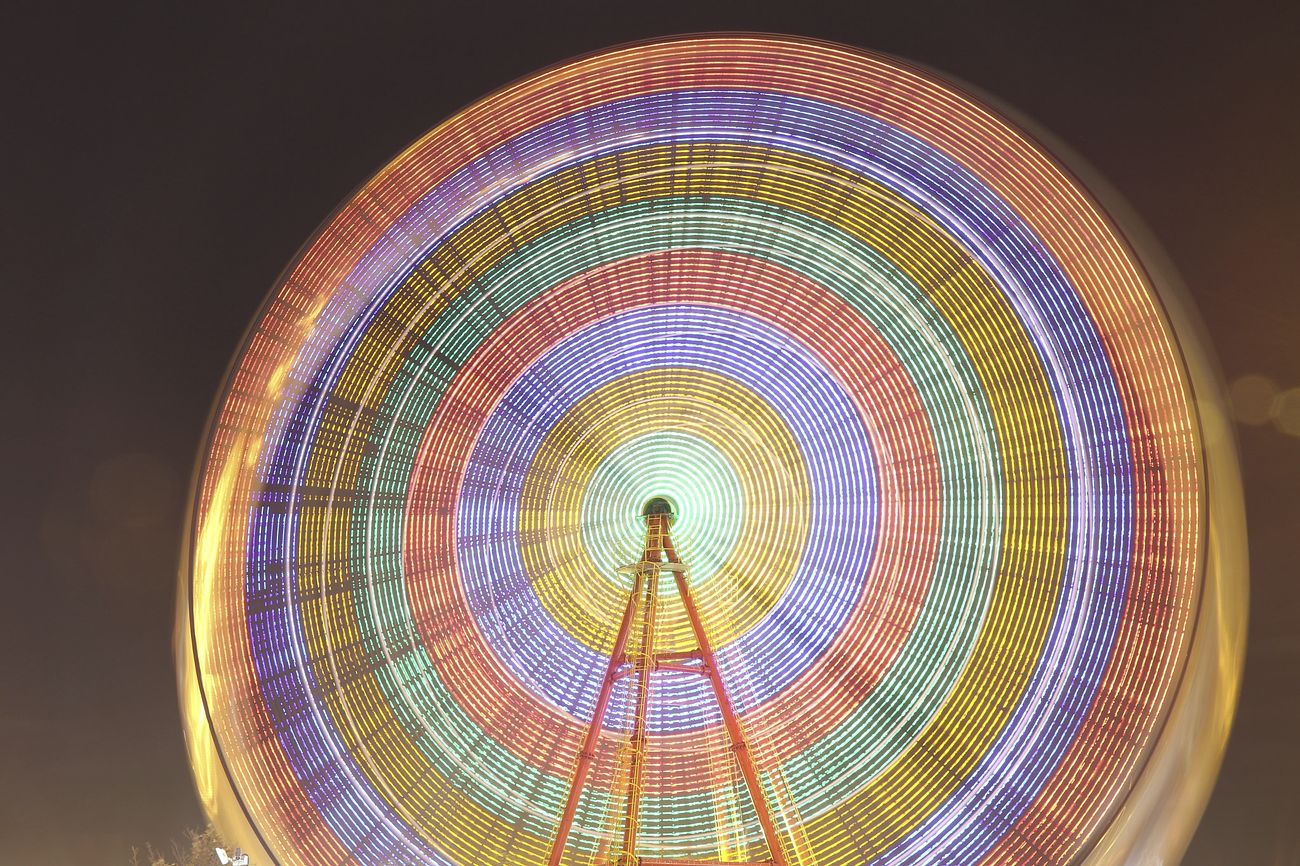
The Flywheel Effect is a concept developed in Jim Collin’s book Good to Great. He argues that a good-to-great transformation never happen in one fell swoop. In building a great company, or social sector enterprise, there is no single defining action, no grand program, no one killer innovation, no solitary lucky break, no miracle moment. Rather, the process resembles relentlessly pushing a giant, heavy flywheel, turn upon turn, building momentum until a point of breakthrough, and beyond.
Rick Kettner provides a great summary of the concept here or you can watch his YouTube video below.

 Breath by Breath