Gentle parenting is an umbrella term for a parenting approach that aims “to recognize and meet the needs of children in a gentler, more respectful way without using traditional, authoritarian-style discipline and punishments.” The gentle-parenting framework focuses on raising children “who feel seen and loved” and “teaching parents how to allow kids to have their big feelings while setting and holding strong boundaries.” Through this framework, parents are taught how to maintain boundaries with their children without the use of traditional discipline methods (e.g. time out, a “naughty chair,” spanking, “Go to your room!” etc.).
Maggie Nick, MSW, therapist and founder of Parenting with Perspectacles, contends that while gentle parenting is often misconstrued as letting your kids walk all over you, it is the biggest misconception. Many people think that because gentle parenting advises against harsh discipline, kids will become entitled or spoiled. However, Nick says, that is simply not the case.
“Meeting kids’ emotional needs helps them feel safe and secure, not entitled and spoiled,” she says. “And punishments are terrible teachers. It is completely possible, and not that hard, to hold kids accountable for their behaviour, teach them about the impact of their actions, while making them feel loved and supported.”
Tomorrow my seven month sabbatical ends and I return to work. I am feeling a mixture of excitement and anxiety. I am excited to see my colleagues. I am incredibly fortunate to love my work and my team. It means a lot to me to contribute to something bigger than myself and to help make a positive difference in the world. There have been less opportunities for me to do so since being on leave and I am looking forward to getting back to it.
I am feeling anxious as I was quite overloaded and stressed before I left on this break. Between supporting aging parents, parenting a teenager, working full-time, and managing a household on my own, I was tapped out. There is only so much time and energy to go around and I was consistently running on empty.
Once I stepped away from work, I genuinely expected most of my stress to disappear; and, in practice, I was surprised to learn that this was not the case. As the famous quote goes by Jon Kabat-Zinn, “Wherever you go, there you are.” I definitely experienced less external pressure, once I left the office, but I managed to quickly fill this gap with internally driven pressure and worries.
The human brain is a funny thing. Once an issue is removed, it adeptly replaces it with another, if you are not careful. It does not naturally rest in a state of ease. According to Buddhist principles, this tendency is called the “monkey mind.” The term that refers to the natural human inclination to feel unsettled, restless, or confused. I came to realize that cultivating rest and ease is an active, daily practice. It starts with paying attention to the internally driven pressures, determining what is essential, and then letting the rest go. It requires allowing for some things to fall off of the table.
During my time away, I have learned the value of rest. For me, rest has always been a “nice to have”, or an act of indulgence while I am on holiday. I now understand that rest is something that must be scheduled in, and committed to, along with other priorities. I cannot function efficiently without it. It is the gas that fills up my tank. Although it is challenging to find time in a busy life, rest takes many forms, including something as simple as fifteen minutes of reading, or a short ten minute nap. It does not have to be a big thing. Little actions add up to having a big impact.
Despite my reservations about ending my sabbatical, the reality is the person who is showing up at the office tomorrow is not the same person who left. And when one element in a situation, or relationship changes, the whole dynamic shifts. I bring back with me a range of new experiences and perspectives that will help me to protect my heart and mind from returning to a state of overload. I just need to take it one moment at a time, find my centre, and remain gentle with myself during the transition.
“Once the realization is accepted that even between the closest human beings infinite distances continue to exist, a wonderful living side by side can grow up, if they succeed in loving the distance between them which makes it possible for each to see the other whole and against a wide sky.”
I have a thirteen year old daughter. Consent is an essential concept for her to both learn and understand. I recently came across this short educational video and it does an excellent job of explaining it in simple terms, so I thought I would share it with you. Most adults would benefit from watching it too.
What does it mean to function optimally in life? It means showing up in every area of your life without overpromising or doing more than your share. You get things done, you follow through, you keep your word, and you are clear about what is and is not your responsibility. You have enough time to take care of yourself and you know your limits. You know when to ask for help or support and feel comfortable doing so. You are not regularly doing more than what is required to accomplish your goals.
High-functioning codependency is behaviour that includes disordered boundaries, where you are overly invested in the feeling states, the decisions, the outcomes, and the circumstances of the people in your life to the detriment of your internal peace and wellbeing.
A high-functioning codependent is often smart, successful, reliable, and accomplished. They can do it all. But what is the cost? Over-functioning leaves a person burnt out and exhausted from trying to maintain an impossible workload and keep all of the balls in the air.
If you identify as an over-functioner, it is important to get really clear about what is your responsibility, and what is not. When you take responsibility for things that are not your own, you are overstepping a boundary. At its core, codependent behaviour is a bid for control. Even if your heart is well intentioned, if your actions are driven by fear, you are not giving from a place of love and fulfillment.
“Instead of asking ourselves, ‘How can I find security and happiness?’ we could ask ourselves, ‘Can I touch the center of my pain? Can I sit with suffering, both yours and mine, without trying to make it go away? Can I stay present to the ache of loss or disgrace—disappointment in all its many forms—and let it open me?'”
I just spent ten days in Mexico visiting my step-dad, Bob. He lives in a small community in the countryside located outside of San Miguel de Allende: a city in Mexico’s central highlands, known for its baroque Spanish architecture, thriving arts scene and cultural festivals. In the city’s historic, cobblestoned centre lies a famous neo-Gothic church, Parroquia de San Miguel Arcángel, whose dramatic pink towers rise above the main plaza, El Jardín.
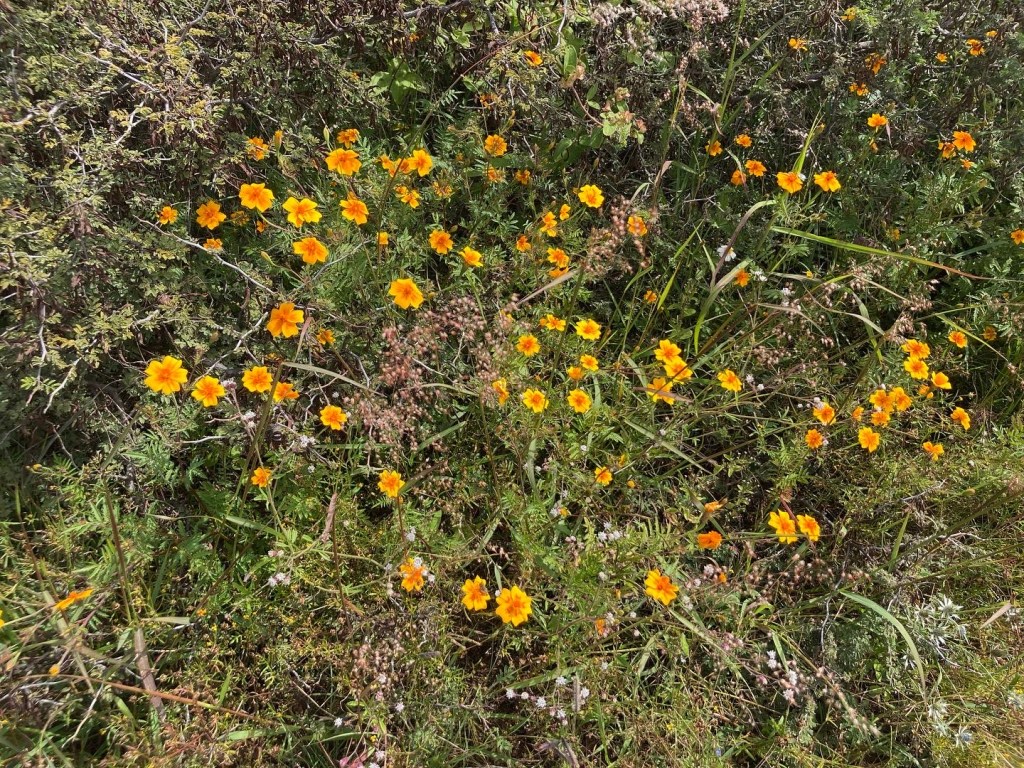
We enjoyed a lovely, quiet visit together, with a daily routine consisting of morning walks in the countryside with the dogs, afternoons of reading and writing, and evenings filled with good meals and movies. October is a particularly beautiful time to visit Mexico, as the rainy season is coming to an end, and the vegetation is lush and bright.
A highlight of our the experience was learning about the local cuisine together. During my visit, Bob and I enjoyed a number of cooking lessons, and I learned how to make authentic guacamole, quesadilla, enchiladas verdes and chile relleno. It was such a privilege to be taught many of these family recipes from Alicia, who grew up in the local area. Food is a beautiful way to meaningfully connect and experience a culture. #JoyBlogging
“…Even though it’s mostly progressives who identify as Ethical Consumers, as Teachout illuminates, making change through the way we shop is ultimately a right-wing idea. We’ve fully embraced the neoliberal system and worldview that change should happen through the marketplace. Conservatives are the ones who think the best solutions to social problems as market solutions, and have fought historically-progressive strategies to tackle social and environmental problems such as government regulation, public spending, better education, social programs, and trade pacts that protect human rights and the environment both here and abroad. Ethical Consumption may have started out 30 years ago as a byproduct of our powerlessness in the neoliberal era, but somewhere along the way we bought into it…
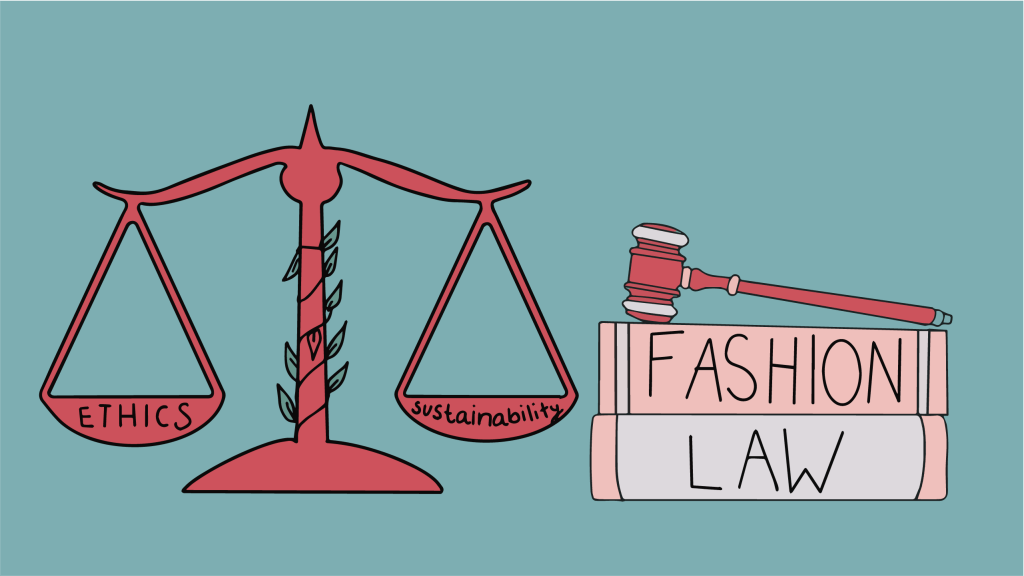
…But I think it’s self-evident that Ethical Consumerism is a grossly inadequate and unequal response to our most pressing problems, like the climate crisis, systemic racism, sweatshop wages, growing inequality, and so on. Moreso, I’m convinced these problems are in large part created by unchecked corporate power, unregulated capitalism, and our weakened democracy that Ethical Consumers help prop up. Fashion is a perfect example: What drives sweatshops is not a consumer demand for sweatshops. It is a lack of proper labor laws to protect garment workers and intense economic concentration that incentivizes the industry to drive down wages. The best solution to this problem is to nurture our democracy and return to the progressive and strong mass movements of the past that provide a counterweight to the market’s crushing power…
…But where we get ourselves into trouble is in viewing shopping as a moral act—and viewing shopping at a cheap chainstore that has poor business practices as an immoral one. Consumption is an economic imperative (there’s no escaping it under capitalism), and it is fundamentally determined by our income. Unless we believe that rich people, who can afford more ethical products, are somehow more ethical than the rest of us, we must confront that it’s unacceptable and arguably deeply unethical itself to ever tie human “goodness” to what we buy. In fact, I now believe that the only ethical approach to consumption (if such a thing exists) is to make the cheapest available products as responsibly as possible, as was recently argued in The Guardian, which means overhauling the big companies that make most of the stuff that most people buy….
…None of this is easy. Learning how to get involved in real political movements means learning entirely new skills (Eitan Hersh’s book Politics Is for Power is a great starter guide) and requires reinvigorating our broken political system, the rewards of which require patience. And Ethical Consumption is second nature to many of us. Recently, when I posted about PayUp Fashion, our new phase of the #PayUp campaign in the Consumer Activist tradition of calling for systemic reform of corporate fashion, including new laws and regulations to create living wages for all garment workers, a colleague responded, “This is why we need to support small business.” We still cling to the hope that we just need to expand our ranks. Likewise, when Everlane’s workers tried to unionize earlier this year, the Instagram comments were mostly some variation of, “I won’t be shopping there again.” A more powerful strategy, the public strategy, would be to find ways to support organized labor across the retail sector…
…When in doubt, think like a Consumer Activist. Rather than give up plastic to-go cups, Consumer Activists would work together to ban single-use plastics, investigate the plastic industry’s influence over American government, and push our government to propose a low-carbon national policy that undercuts the plastic lobby’s clout. Rather than buy organic food, they’d call to better regulate the petrochemical industry, build new social programs to support sustainable farming, and work to ban toxins. And rather than boycott Amazon or delete Instagram, we’d realize our own antitrust laws should’ve never allowed these platforms to have this much control to begin with…
“My hesitancy in speech, which was once an annoyance, is now a pleasure. Its greatest benefit has been that it has taught me the economy of words. I have naturally formed the habit of restraining my thoughts. And I can now give myself the certificate that a thoughtless word hardly ever escapes my tongue or pen. I do not recollect ever having had to regret anything in my speech or writing. I have thus been spared many a mishap and waste of time. Experience has taught me that silence is part of the spiritual discipline of a votary of truth. Proneness to exaggerate, to suppress or modify the truth, wittingly or unwittingly, is a natural weakness of man, and silence is necessary in order to surmount it. A man of few words will rarely be thoughtless in his speech; he will measure every word.”
Today, it is Thanksgiving in Canada; and I thought it fitting to share an address from the Haudenosaunee Confederacy.
The confederacy, made up of the Mohawks, Oneidas, Onondagas, Cayugas, and Senecas was intended as a way to unite the nations and create a peaceful means of decision making. Through the confederacy, each of the nations of the Haudenosaunee are united by a common goal to live in harmony. Each nation maintains it own council with Chiefs chosen by the Clan Mother and deals with its own internal affairs but allows the Grand Council to deal with issues affecting the nations within the confederacy.
Often described as the oldest, participatory democracy on Earth, the Haudenosaunee Confederacy’s constitution is believed to be a model for the American Constitution. What makes it unique is its blending of law and values. For the Haudenosaunee, law, society and nature are equal partners and each plays an important role.
The Thanksgiving Address (the Ohen:ton Karihwatehkwen) is the central prayer and invocation for the Haudenosaunee. It reflects their relationship of giving thanks for life and the world around them.
A friend once told me that she thinks of her life as a boat with a limited number of seats on it. Every person who is allowed on board is given priority access to her time and energy, so she is careful about who she chooses as a passenger.
Although this analogy could be interpreted as mean spirited, I find it to be quite wise. The reality is we are all have a finite amount of resources to allocate each day. When we are tapped out, both emotionally and physically, there is nothing left to give: so it is important to be mindful of what we are giving and to whom.
I like to think of my own life as a series of concentric circles, with a small handful of priority people nestled at the core (my “boat”), and other friends and family members placed in wider and wider circles of importance, which ripple out from my centre point.
There is enough love, time and energy for everyone who falls within my radius, but the amount that I allocate, and how often, varies upon their proximity to the source. This works for me; and it helps me to prioritize what I say “yes” and “no” to in my life.












 Breath by Breath