Category: Things I Love
TED Talks: How Great Leaders Inspire Action
Joy Journal
Joy Journal #25: November 12, 2022
Now that the time has fallen back, and there are less hours of sunlight in the day, my friends and I are back to swimming in the ocean in the early morning hours. Rich in magnesium, seawater helps release stress, relax your muscles and promote deep sleep. Swimming in the sea has also been linked to stimulating the parasympathetic system which is responsible for rest and repair and can trigger the release of dopamine and serotonin.
Exposure to full spectrum sunlight in the morning causes our bodies to produce serotonin, which not only helps later on with nighttime sleep, but improves mood throughout the day. Bright lights have been used for a long time as standard treatment for seasonal depression. Outdoor light, even on a cloudy day, delivers considerably more lux than indoor light.
I love this special time with my friends. We always laugh a lot and it is a great micro opportunity to catch up on each others lives. Although I never want to go into the cold water (and it does not get easier), I never regret doing it. It makes my body and mind feel electric for the rest of the day. #JoyBlogging


Something to Inspire
“Stop trying to control other people. Stop it. I was at an event in Los Angeles, with my friend Cathy Heller, and we took a bunch of questions from the audience. I can’t stop thinking about this particular question from one woman. ‘How do you stop controlling your friends?’ You stop. That’s how you do it.
When you catch yourself trying to control someone, and then you let go of the desire to change them, and you redirect all of that angst and energy towards caring, listening, supporting: creating this reciprocal exchange of allowing them to show up, exactly as they are, you get connection back. Your attempt to block somebody, blocks connection. It blocks the exchange between people.
And here’s one more thing about letting go when it comes to relationships. Maybe, sometimes, the purpose that some people play in your life is simply to teach you how to let go.”
Things I Love: Iliza Shlesinger
Listen List: Mary Gauthier, “Mercy Now”
Heart Centered Learning: Meyers Briggs
The Myers-Briggs Personality Type Indicator (MBTI) is an inventory designed to identify a person’s strengths and preferences. The questionnaire was developed by Isabel Myers and her mother Katherine Briggs based on their work with Carl Jung’s theory of personality types. Today, the MBTI inventory is one of the world’s most widely used psychological instruments.
I identify as an INFJ; this is an individual with Introverted, Intuitive, Feeling, and Judging personality traits. Described as the “Advocate,” an INFJ tends to approach life with deep thoughtfulness and imagination. Their inner vision, personal values, and a quiet, principled version of humanism guide them in all things.
Over the years, I have found the information outlined in my detailed MBTI report to be incredibly helpful. It provides me with valuable insight into how I prefer to navigate the world, on both a personal and professional level; and it supports me with informed decision-making when faced with important life choices.
Something to Inspire

“Paying attention requires conscious effort. Your default brain activity is not attentive. Your inattentive brain is zoned out, daydreaming, on autopilot, and full of constant background, repetitive thinking. You can’t create a new memory in this state. If you want to remember something, you have to turn your brain on, wake up, become consciously aware, and pay attention.
Because we remember what we pay attention to, we might want to be mindful about what we focus on. Optimists pay attention to positive experiences, and so these events are consolidated into memory. If you’re depressed, you’re less likely to consolidate happy events or pleasant experiences into memory because happiness doesn’t jive with your mood. You don’t even notice the sunnier moments when you’re only focussing on the dark clouds. You find what you are looking for.
If you look for magic every day, if you pay attention to the moments of joy and awe, you can then capture these moments and consolidate them into memory. Over time, your life’s narrative will be populated with memories that make you smile.”
~ Excerpted from Remember by Lisa Genova
Something to Inspire
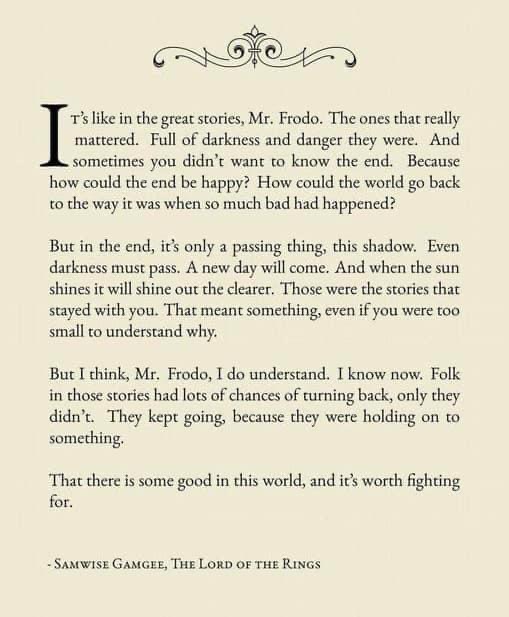
Things I Love: Rob Bell, “Don’t Rush”
Listen List: Taylor Swift, “Snow on the Beach”
I love Taylor Swifts’ entire new album, “Midnights“, but the song that she wrote with Lana del Rey, “Snow on the Beach”, particularly resonates with me.
Heart Centered Learning: Parenting with Perspectacles
Gentle parenting is an umbrella term for a parenting approach that aims “to recognize and meet the needs of children in a gentler, more respectful way without using traditional, authoritarian-style discipline and punishments.” The gentle-parenting framework focuses on raising children “who feel seen and loved” and “teaching parents how to allow kids to have their big feelings while setting and holding strong boundaries.” Through this framework, parents are taught how to maintain boundaries with their children without the use of traditional discipline methods (e.g. time out, a “naughty chair,” spanking, “Go to your room!” etc.).
Maggie Nick, MSW, therapist and founder of Parenting with Perspectacles, contends that while gentle parenting is often misconstrued as letting your kids walk all over you, it is the biggest misconception. Many people think that because gentle parenting advises against harsh discipline, kids will become entitled or spoiled. However, Nick says, that is simply not the case.
“Meeting kids’ emotional needs helps them feel safe and secure, not entitled and spoiled,” she says. “And punishments are terrible teachers. It is completely possible, and not that hard, to hold kids accountable for their behaviour, teach them about the impact of their actions, while making them feel loved and supported.”
 Breath by Breath