Something to Inspire

A few months ago, I shared the Letters to Love project. It is a powerful practice and community started by Liz Gilbert. She recently shared one of her own letters and it deeply resonated with me. I wanted to share it with you and encourage you to explore more of her work on Substack.

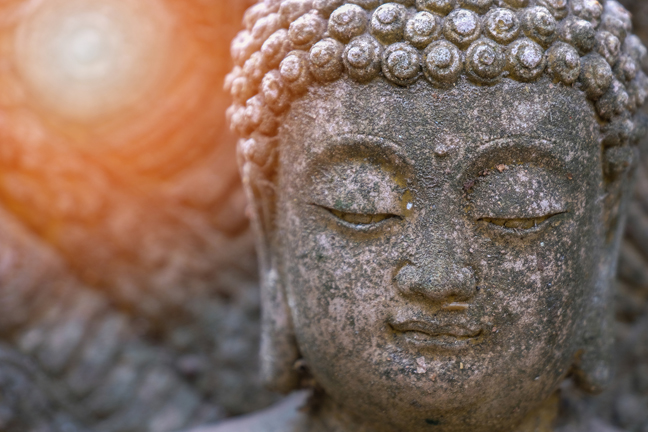
Photo by cottonbro studio on Pexels.com

Dear Love, what would you have me know today about finding a sense of calm?  

Oh my dearest little jitterbug, what a sweet question! Where indeed can a body find a sense of calm? In this world? In this economy? Surrounded by these monkeys-dressed-in-human-garb? Sometimes it seems impossible, doesn’t it?

I can start by telling you that you aren’t going to find it out there. Your calm is not located in the outside world, nor does anyone else besides you hold the keys to it.

I mean, yes, you can find temporary fixes to a nervous body by reaching for things outside of yourself to settle you down, and heaven knows you have tried them all over the decades: prescription and non-prescription drugs, alcohol, food, mass media and social media, somebody else’s body or attention upon you, perfectionism, success, shopping, adventure . . . oh, my dear little twerky bean, the world has so much to offer you that will alter your nervous system. Yes indeed it does — and all you have to do to get it is pay through the nose, or beg, or hunt, or manipulate, or compromise and exhaust yourself.

But is that really what calm is? Really? Something you pay for, or barter for?

Why would we have designed you that way? Why would we have made it so difficult for you, such that finding a sense of ease in the world would require you to work so hard in the material realm? And why would we have made it so that your sense of calm is so fragile and fleeting that all it would take to disturb your serenity is for you to lose any of those temporary fixes that you have clutched at in order to settle yourself down?

Why would we have made you so DEPENDENT, when we love you so much?

Well, my dear, we didn’t. It’s all been a big misunderstanding. Your calm is not dependent at all upon what happens outside of you. You know this intellectually, my love, and you’ve certainly read enough spiritual texts to believe it to be the truth, but it’s time for you to know it in your body. And that’s what we are working on here.

My love, your sense of dis-ease and disturbance has always come from within you, but so does the remedy. Doesn’t that make sense? The same brain that can produce cortisol and adrenaline can also produce oxytocin and serotonin. If the trouble is within, then so is the fix. Doesn’t that sound like how nature works? It is how nature works.

And this should be incredibly good news for you, given that the world has become more unstable than ever. How dreadful it would be if you had to rely upon people, places, or things in the outside in order to feel okay on the inside. (How long are you planning to wait for that, by the way? For everything in the outside world to be put in order, such that you can relax? How’s that going so far?)

Why would we do that to you, when we love you so much?

My child, it is no accident that I have been telling you more strongly than ever that it is time to go within. Every day in our communion, I have been telling you that all the relief and connection you need are to be found within the autonomous nervous system that we have provided for you. That your moods and fears and indeed your HOPE does not need to be tied to anyone else, or anything else, ever again.

We have a plan for you. It involves things you already know how to do. It’s just a matter of your doing it with more love and commitment than ever. Meditate, my dear one — but I want you to sit for more time each day, and sometimes twice a day. Get married to meditation. All the answers you will ever need will be found in the space of meditation — including my voice. And remember — listening to my voice is the same thing as meditating. If you’re sitting quietly conversing with me, that is meditation. If you are writing letters from me, that is meditation. And if you are reading and responding to letters that I have written to others, that is also meditation.

So ask me to come and visit you, while you are sitting still and quiet. I will talk you through it. We will be together. I will tell you everything you need to know.

Your breath is my breath, sweetheart. We share the same breath. I am your breath. Which means that approximately 12 to 20 times a minute, I come to visit you, to replenish you, and to tell you how much I love you.

Your heart is my heart, child. We share the same heart. Now go there and roam. Your heart is our home. I’ll meet you there.

Have a quiet day. I love you —

Love, LOVE
Messy Mindfulness

“It is like this now.” ~ Ajahn Chah

I practice and study Buddhist Insight (Vipassana) meditation with a small local group of practitioners once a week. I discovered this form of Buddhism when my daughter was three years old and it has become an important anchor in my life. Vipassana can be translated as “insight,” a clear awareness of exactly what is happening as it happens. It is a direct and gradual cultivation of mindfulness or awareness. 

Through the process of mindfulness, you slowly becomes aware of what exists below the ego image. Vipassana is a form of mental training that teaches you to experience the world in an entirely new way. It is a process of self-discovery, an investigation in which you observe your own experiences, while participating in them as they occur.

Most of the members of my sangha are seasoned meditators, who have developed a committed and consistent daily practice over many years: sitting for lengthy periods of time, several times a day. They are all older than me, and they are either retired, single, or have grown children, so they are at a different stage and place in their lives. As an independent parent, working full-time, and caring for my aging parents, it can be challenging to fit in a formal sitting period once a day, let alone multiple times. It is easy to beat myself up about it and feel like a failure; or it is an invitation to recognize that this is the place I am at currently in my life. Mindfulness still provides me with refuge. It just shows up in a different form.

At the moment, I am allowed to visit my mom once a week in her assisted living facility. In addition her late stage Alzheimer’s Disease, we are also facing COVID-19 restrictions, so the visiting conditions are very limited. Our allotted half an hour is spent together in a small, boardroom with a large wooden table at its centre. I wear a surgical mask and I cannot hug my mom. We are allowed to hold hands, and as she needs to constantly move her body, we walk in circles around the perimeter of the table. My mom has lost her ability to use language. She talks with a nervous, non-stop energy, and the words tumbling out her mouth are mostly unrecognizable. We cannot carry on a conversation. She stoops and she cannot look me in the eyes. I listen and nod along to her monologue. I rub her back and I provide her with comforting responses and assurances when I think she needs them.

What I am noticing about our time together is that we are firmly rooted in the moment. There is no ability to escape and wander away from where we are with small talk or distractions. We are in this moment together, and then the next one, and the next, until the time in our proverbial hourglass elapses. It is a walking meditation, one which demands that I pay attention to my surroundings, and the subtle changes in my mother’s tone and demeanour. I notice the rhythm of my own breath and the pattern of our steps. We are learning relate to relate to one another in a new and unfamiliar way. There are no recognizable protocols. We make it up as we go. All that is constant is the love that connects us together.

As the parent of a young adolescent, I bear witness on a daily basis to the rapid physical and emotional changes taking place within my child. She is often flailing in deep waters of intense emotions and it is hard not to get pulled under with her. My daughter knows just what to say to evoke a response from me; she is smart and she never misses her target. It is easy to get caught up in an automatic response: a knee-jerk reaction, where I lose my temper and perspective, along with her. It is in these moments that I am being provided with an invitation to take a step back and pause for just a beat: to bear witness to the intense triggering that is occurring. To feel the anger and agitation that arises from deep inside and let it wash over me. To choose not to respond and instead take a moment to breathe in deeply and seek ways to regulate my own body. Once I find my centre, I can then try to locate my child, and pull her into shore. This is my practice in motion.

During a busy day, it is easy to feel like there is no time for meditation, and so rather than doing a little bit, I do nothing. One of the members of my group, who used to be an emergency room nurse, provided me with some good advice, which has helped me to find a path forward. She shared that when she was working full-time she would fit in her daily practice in five minute increments. Much like getting up from your desk and stretching, or taking a short walk, a five-minute meditation is a mental break which can be easily fit in almost anywhere. I do not need a cushion or a quiet space: I only need awareness, the ability to scan my body, and my breath. This can be done while driving, walking or washing dishes. It can be achieved through generating thoughts of love and gratitude. These moments of conscious reflection are like mini-calisthenics for the brain: every little one helps to make it stronger and more receptive. Slowly but surely my capacity for holding this mental space increases over time.

Although I still enjoy the idea of going on a ten-day silent meditation retreat, or finding a way to cultivate a solid daily practice, I also accept that this is where I am in my life at the moment. It is messy and unpredictable and I need to be flexible and adaptive in my approach. Mindfulness provides value in all of its many forms and holding on to a set idea of what it needs to look like, in order to be successful, is unhelpful. Providing myself with love and acceptance is part of my work, because without the ability to extend this to myself, I will not be able to offer it to others.

A Lotus Blooming

“If you feel lost, disappointed, hesitant, or weak, return to yourself, to who you are, here and now and when you get there, you will discover yourself, like a lotus flower in full bloom, even in a muddy pond, beautiful and strong.” ~ Masaru Emoto

This week, I have been paying attention to feelings of expansion and contraction. There are days where I feel open, joyful and a part of an energy greater than myself. I easily connect with other people and I make great progress with projects. I am creative and full of ideas. Everything feels streamlined and fluid. I experience ease and flow.

And then there are days where I feel small, vulnerable and afraid. I second guess every decision that I make. The world around feels large, frightening and menacing. I cannot see solutions. I am stuck in the mud and I cannot move forward.

There is little tangible difference between the two kinds of days in terms of form: I wake up; I go about my business; I return home; I sleep. The cycle of activity is essentially the same. It is the outside situation that changes and my perception along with it.

On the days where I feel expansive, things are going my way. There are little wins or moments to celebrate. I receive praise or acknowledgement. I am facing no obstacles. On the days where I feel contracted, I am reacting to a situation or a person that is unpleasant. There is an issue to be overcome. I am grappling with a challenge or inner battle. The common thread is that the outside factor controls the inside response.

Equanimity is defined as a state of psychological stability and composure which is undisturbed by experience of or exposure to emotions, pain, or other phenomena that may cause others to lose the balance of their mind. It refers to the power of observation and the ability to see without being caught by what you see. When well-developed, such power gives rise to a great sense of peace.

“If you let go a little, you will have a little peace. If you let go a lot, you will have a lot of peace. If you let go completely, you will know complete peace and freedom. Your struggles with the world will have come to an end.” ~ Ajahn Chah

In Buddhism, equanimity is a protection from the “eight worldly winds”: praise and blame, success and failure, pleasure and pain, fame and disrepute. Becoming attached to or excessively impacted by success, praise, fame or pleasure can cause suffering when life changes direction. 

There are seven qualities of mind that are recommended to help cultivate a sense of equanimity:

  1. Integrity: When you live and act with integrity, you feel confident about your actions and words, which results in the equanimity of blamelessness. 
  2. Faith: If you have confidence in your own abilities, then you are more likely to meet life’s challenges.
  3. A well-developed mind: Much as you can develop physical strength, balance, and stability of the body in a gym, so too can you develop strength, balance and stability of the mind. This is done through practices that cultivate calm, concentration and mindfulness, like meditation.
  4. A sense of well-being: It is easy to overlook the well-being that is easily available in daily life. Taking time to enjoy a cup of tea or time spent with your child can be a training in well-being.
  5. Wisdom: Wisdom is an important factor in learning to have an accepting awareness, to be present for whatever is happening without the mind or heart contracting or resisting. Honest awareness of what makes you imbalanced helps you to learn how to find balance.
  6. Insight: One of the primary insights is the nature of impermanence. In the deepest forms of this insight, it becomes apparent that things change quickly that you cannot hold onto anything: eventually the mind lets go of clinging. 
  7. Freedom: This comes as you begin to let go of reactive tendencies. 

There is power in knowing that I can break the cycle of expansion and contraction. I can live more intentionally and cultivate an inner peace and equanimity. The first step is to take on the role of observer in my daily life. What is triggering me and causing a reaction, both positive and negative? How can I start to sink beneath the waves, rather than riding on top of them? How can I locate my centre and stay grounded, despite what it taking place around me? These are some of the questions that I will be investigating in the weeks and months ahead.

Learning to Parent Myself

Woman Makes Heart With Hands In Sunset. Healthy People  Lifestyl

Ninety percent of the time, I consider myself to be a pretty decent parent. I care deeply about my child and I enjoy her company. I help her with homework and participate in school field trips. We talk about the world and make each other laugh. We go on adventures and enjoy each other’s company.

The other ten percent of the time, I feel like a failure. I raise my voice and lose my temper. I am short with her when I should be patient. I say things that I should not. I am the worst version of myself. It is not that I think I should be a perfect parent but I do want to be kind one; and ten percent of bad behaviour feels like it cancels out the ninety percent of good.

When I am calm and centered, I encourage my daughter to take deep breaths when she is angry. I remind her that just because she is mad, she is not allowed to be mean. I bring her in close and hug her when she is misbehaving. Why is it so hard to follow my own good advice, in the heat of the moment?

It is amazing to me how easy it is to be an unfiltered version of yourself with those that you love most. To explode when you are angry or to say all of the things that come to mind with wild abandon. We feel safe together, so we let it all hang out; rather than showing the restraint we do with those who are not in our inner circle.

In paying attention to these moments, I notice that it most often occurs when I am tired, stressed or overloaded. There is no opportunity for me to stop and pause when I am running dry; as there is nothing left in my reserve tank. I am realizing that in order to be a better parent to my daughter, I need to start being a better parent to myself: offering up attention, love and care, rather than judgment and frustration.

As an independent parent, it can be difficult to find time to rest and decompress. Life is busy and there are many moving parts. It is hard to slow down. If I do not make space for myself on a daily basis, however, the fragile balance tips. Over the last little while, I have been testing out some strategies for better managing the stresses of daily life:

  1. Movement:The first thing that helps is a commitment to regular exercise. I need to move my body every day. It can be as simple as taking a walk at lunch or a free online yoga class at home (doyogawithme.com). Movement in any form is medicine: for the mind and body.
  2. Meditation:A regular practice of meditation is a good tool. Sitting still and paying attention to my breath for ten minutes a day, first thing in the morning, gives me an anchor in the moments when I later feel ungrounded. Deep, belly breaths really help to take the edge off of a difficult situation.
  3. Rest: My daughter and I spend a lot of time together and I cherish it; I am also realizing it is essential that I have time to rest and to be alone. I aim to get her into bed early each evening; both so she can rest after a long day and I am left with a pocket of time to myself. After she is asleep, I can take a hot bath, watch a show or read a book. I also like to go to bed early myself, as it is essential for my energy levels and overall well-being.
  4. Reflection: When I am not at my best, I often regret the things that come out of my mouth. In the moments of frustration or anger that arise, I am working to create a small space between the emotion and myself: to pull back and reflect. Who do I want to be in this moment? How do I want my child to remember it? Does this behaviour feed connection or separation? Although it is difficult, it really helps to shift the dynamic.

I feel fortunate that there is an opportunity, each and every day, to start new and recommit to being a better parent, partner and friend. Love is amazingly resilient, forgiving and patient; but is also needs to be fed a steady diet of kindness, tenderness and joy.

An important first step is to start by acting as a parent to myself: to make sure that I am fed, cared for and rested. To give myself time for things that fill me up and build my capacity to pause in those difficult and challenging moments. If I do not, and I allow myself to run on empty, I am guaranteed to tip over into the dreaded ten percent.

If you enjoyed this post, please consider signing up for my monthly newsletter in the link below. You can unsubscribe at any time.

Processing…
Success! You're on the list.

______________________________________________________________________________

This article was written for the June 2019 edition of Island Parent Magazine.

TED Talks: My life is my message

I love TED talks. TED is a nonprofit devoted to spreading ideas, usually in the form of short, powerful talks (18 minutes or less). TED began in 1984 as a conference where Technology, Entertainment and Design converged, and today covers almost all topics — from science to business to global issues — in more than 100 languages. Meanwhile, independently run TEDx events help share ideas in communities around the world.

I am going to start posting some of my favourite TED talks. I hope you enjoy them. xx

“Most of us do not take up nearly the space the universe intended for us…which is why when you see someone in the full flow of their humanity, it is remarkable.  They are at least a foot bigger, in every direction, than normal human beings; and they shine. They gleam. They glow. It is like they have swallowed the moon.”

~ Caroline McHugh, “The Art of Being Yourself”