As the loved ones around me age, and grow closer to death, or I return to a beloved place that is now unrecognizable, it causes me to reflect upon the people, places and experiences that are gone. It is so difficult to let go and accept when things have changed. There is a tender part of me that deeply aches for everything to return to how it once was.
A dear friend of mine recently reminded me that nothing truly dies or ends, as it lives on in your heart and in your memory. There is such truth in this perspective. All I need to do is close my eyes, put my hands on my heart, and remember. It is all there. The other truth is that change is not always bad, it is simply different. In fact, it often allows for new opportunities to emerge, and new relationships to develop.
Resistance to the unknown is a natural human response and it embodies the First Noble Truth of dissatisfaction and suffering:
The First Noble Truth describes the nature of life and our personal experience of this impermanent, ever changing world. All beings desire happiness, safety, peace and comfort. We desire what is satisfying, pleasurable, joyful and permanent. However, the very nature of existence is impermanent, always changing, and therefore incapable of fully satisfying our desire. Inevitably, we experience frustration, anger, loss, unhappiness, and dissatisfaction.
Life is in constant change, and changes such as birth, old age, sickness, and death can bring dissatisfaction or suffering. Suffering may arise from being associated with people or conditions that are unpleasant, from being separated from people we love, or conditions we enjoy, from not getting what we desire, or from getting what we desire then losing it. Even our own thoughts and feelings are impermanent, constantly changing. Inevitably, all physical, emotional, and mental conditions will change.
Insight into the First Noble Truth: To overcome dissatisfaction and suffering, it is essential that we understand and accept the ever-changing, impermanent nature of life; we acknowledge the presence of dissatisfaction and suffering; we understand the very nature of suffering, and we embrace suffering compassionately, without fear or avoidance.
“First, I must confess that over the last few years I have been gravely disappointed with the white moderate. I have almost reached the regrettable conclusion that the Negro’s great stumbling block in the stride toward freedom is not the White Citizen’s Council-er or the Ku Klux Klanner, but the white moderate who is more devoted to “order” than to justice; who prefers a negative peace which is the absence of tension to a positive peace which is the presence of justice; who constantly says “I agree with you in the goal you seek, but I can’t agree with your methods of direct action;” who paternalistically feels he can set the timetable for another man’s freedom; who lives by the myth of time and who constantly advises the Negro to wait until a ‘more convenient season.’ Shallow understanding from people of goodwill is more frustrating than absolute misunderstanding from people of ill will. Lukewarm acceptance is much more bewildering than outright rejection.”
~ Letter from a Birmingham Jail, Rev. Martin Luther King, Jr., 16 April 1963
“It is not the critic who counts; not the man who points out how the strong man stumbles, or where the doer of deeds could have done them better. The credit belongs to the man who is actually in the arena, whose face is marred by dust and sweat and blood; who strives valiantly; who errs, who comes short again and again…who at the best knows in the end the triumph of high achievement, and who at the worst, if he fails, at least fails while daring greatly.”
At the beginning of her talk, Dr. Brown summarizes the value of courage and vulnerability, “The key to whole-hearted living is vulnerability. You measure courage by how vulnerable you are.” She starts every day by putting her feet on the floor and saying, “Today I will choose courage over comfort. I can’t make any promises for tomorrow, but today I will choose to be brave.”
According to Dr. Brown’s research, choosing courage and vulnerability opens us up to love, joy and belonging, and brings us closer to what she calls, “whole-hearted living.” It changes the kind of partner, parent and professional we are when we live brave and authentic lives. Here are a few tips that she provides on how to answer the call to courage:
Be Vulnerable
Dr. Brown argues that, “Vulnerability is our most accurate way to measure courage…”
“…No vulnerability, no creativity. No tolerance for failure, no innovation. It is that simple,” she advises. “If you’re not willing to fail, you can’t innovate. If you’re not willing to build a vulnerable culture, you can’t create.”
Open Up
Dr. Brown asserts vulnerability is the birthplace of love and joy. Highlighting the risks of love, Dr. Brown polls the audience: “Are you 100% sure that person will always love you back, will never leave, will never get sick? How many of you have every buried someone you love? How many of you have lost someone you love?“
“To love is to be vulnerable, to give someone your heart and say, ‘I know this could hurt so bad, but I’m willing to do it; I’m willing to be vulnerable and love you,’ ” she adds.
No Regrets
“Vulnerability is hard, and it’s scary, and it feels dangerous, but it’s not as hard, scary or dangerous as getting to the end of our lives and having to ask ourselves, ‘What if I would’ve shown up?’ ‘What if I would’ve said, I love you?’ “ Dr. Brown tells the crowd. “Show up, be seen, answer the call to courage… ’cause you’re worth it. You’re worth being brave.”
Be Intentional
Humans are hard-wired to care what others think but we need to be intentional about who we accept feedback from. Dr. Brown believes that, “If you are not in the arena, getting your a** kicked and rejected, I am not interested in your feedback.” And she contends that you should listen to: “People who love you not in spite of your imperfection and vulnerability, but because of it.”
Belong To Yourself
Dr. Brown explains that vulnerability is the birth of true belonging, “we are hard-wired for belonging,” wanting other people to love us and “see” us. But that we cannot be vulnerable and not be ourselves— the enemy of belonging is trying to fit in...Belonging, is belonging to yourself first…Speaking your truth, telling your story and never betraying yourself for other people. True belonging doesn’t require you to change who you are, it requires you to be who you are. And that’s vulnerable.”
Gratitude
Dr. Brown describes joy as the most vulnerable emotion as “…in the midst of joy, we dress rehearse trauma...joy becomes foreboding.” Her research reveals the importance of gratitude. She interviewed numerous people who survived harrowing experiences such as mass shootings, loss of a child, natural disasters, or war, as she wanted to better understand how some people come through it and remain compassionate. A common response from those interviewed is the value of gratitude and the importance of appreciation for the little things.
Embrace Discomfort
Dr. Brown contents that we need to be courageous and initiate difficult conversations, so marginalized groups do not bear that responsibility. “To not have the conversations because they make you uncomfortable is the definition of privilege. Your comfort is not at the centre of this discussion. That is not how this works. Of course you’re going to get you’re a** handed to you in these conversations…It’s not a question whether you have a bias or not, it’s a question of how many and how bad and how deep.” Brown underscores that we have to be humble, listen and learn. “We have to be able to choose courage over comfort, we have to be able to say, ‘Look, I don’t know if I’m going to nail this but I’m going to try because I know what I’m sure as hell not going to do is stay quiet.’”
Come Off The Blocks
“Vulnerability is hard and it’s scary and it feels dangerous. But it’s not as hard, or scary or dangerous as getting to the end of our lives and having to ask ourselves: What if I would’ve shown up? What if I would’ve said ‘I love you?’ What if I would’ve come off the blocks? Show up, be seen, answer the call to courage and come off the blocks. Because you’re worth it—you’re worth being brave.”
Cynthia Thurlow is a Western medicine trained nurse practitioner and functional nutritionist who is passionate about female hormonal health. She believes that the inherent power of food and nutrition can be your greatest asset to your health and wellness journey. In this talk, she discusses how intermittent fasting can have profound impact on bio-physical profiles. It is easy to implement, inexpensive and flexible.
NOTE FROM TED: Please do not look to this talk for medical advice and consult a medical professional before adopting an intermittent fasting regiment. This talk only represents the speaker’s views on fasting, diet, and health. TEDx events are independently organized by volunteers. The guidelines that they give organizers are described in more detail here: http://storage.ted.com/tedx/manuals/t…
“Everything you’ve ever wanted is sitting on the other side of fear.” ~ George Addair
Travelling in Europe with my daughter for three and a half months was a big learning curve for me. It was my first time taking an extended trip as solo parent, which was both exciting and intimidating. I was responsible for making all of the decisions, arranging our travel plans, and ensuring that we got everywhere safely and on time. It was a lot to take on, but I pushed myself out of my comfort zone, and it resulted in an amazing adventure for us both.
Throughout our time abroad, when facing something unfamiliar and new, it tended to generate anxiety; but as I was the adult ‘in charge’, I had to push through my fear, and focus my attention on getting us to where we needed to go, or doing what we needed to do. After repeating this action numerous times, over a relatively short period, I was pleasantly surprised at how things unfolded. I discovered that I am pretty good at figuring things out and finding a pathway forward; and when challenges arise, there are often kind people (both strangers and friends) to turn to, and ask for help.
For example, it has been many years since I last spoke French, and I was really rusty when we returned to France. As I am now in my late forties, and less self-conscious, I barrelled ahead, despite making lots of mistakes. Seizing the opportunity to speak French on a daily basis was more important to me than being too intimidated to try. For the first few weeks, it was hard to be so terrible at it, but I kept pushing forward with my efforts. Eventually, I started to make incremental improvements, and before I knew it, I was receiving regular compliments from native speakers. I even established friendships with a group of locals. These affirmations meant the world to me and encouraged me to keep going.
In the second month we were in Aix, we did not host any visitors, and my daughter was in school full-time. I intentionally planned this time to slow down, as I wanted time to focus on my writing and photography, but once it arrived, I felt unsure about being alone for such a long period. I am used to being surrounded by a supportive community of friends and family. Once I moved through the initial fear, however, I decided to just take it one day at a time. Before I knew it, I had established a lovely daily routine, which I came to cherish, and I learned that I really enjoy my own company. This quiet, creative time became a highlight of my trip.
This experience was a valuable opportunity for me to learn about leaning into discomfort and facing fear. It has given me the confidence to incorporate this approach into my regular life and make more brave choices on a daily basis. I am excited see where it leads me next.
Microaggressions are defined as the everyday, subtle, intentional — and often unintentional — interactions or behaviours that communicate bias toward historically marginalized groups.
The difference between microaggressions and overt discrimination, or macroaggressions, is that people who commit microaggressions are often not aware of them; but this does not mean that their impact is not incredibly harmful. You can learn more about this important issue through this short video. It is really well done and worth watching.
“Those who train wholeheartedly in awakening bodhichitta are called bodhisattvas or warriors—not warriors who kill but warriors of nonaggression who hear the cries of the world. Warrior-bodhisattvas enter challenging situations in order to alleviate suffering. They are willing to cut through personal reactivity and self-deception. They are dedicated to uncovering the basic, undistorted energy of bodhichitta.”
Dr. Will Bulsiewicz (Dr “B”) is a world-renowned gastroenterologist. In his book, Fiber Fueled, he discusses how gut health is essential to weight management, overall health and well-being.
If the gut is not working efficiently, the body cannot receive the necessary nutrients for its cells. When food particles and other substances are absorbed incorrectly, the immune system goes into high alert, and it attacks them as pathogens.
This immune response, creates inflammation in the bloodstream, and it moves throughout the body. It causes digestive distress such as bloating, heartburn, or diarrhea. Interestingly, the most common symptoms for poor gut health symptoms show up in the brain: depression, anxiety, insomnia, brain fog, and poor memory.
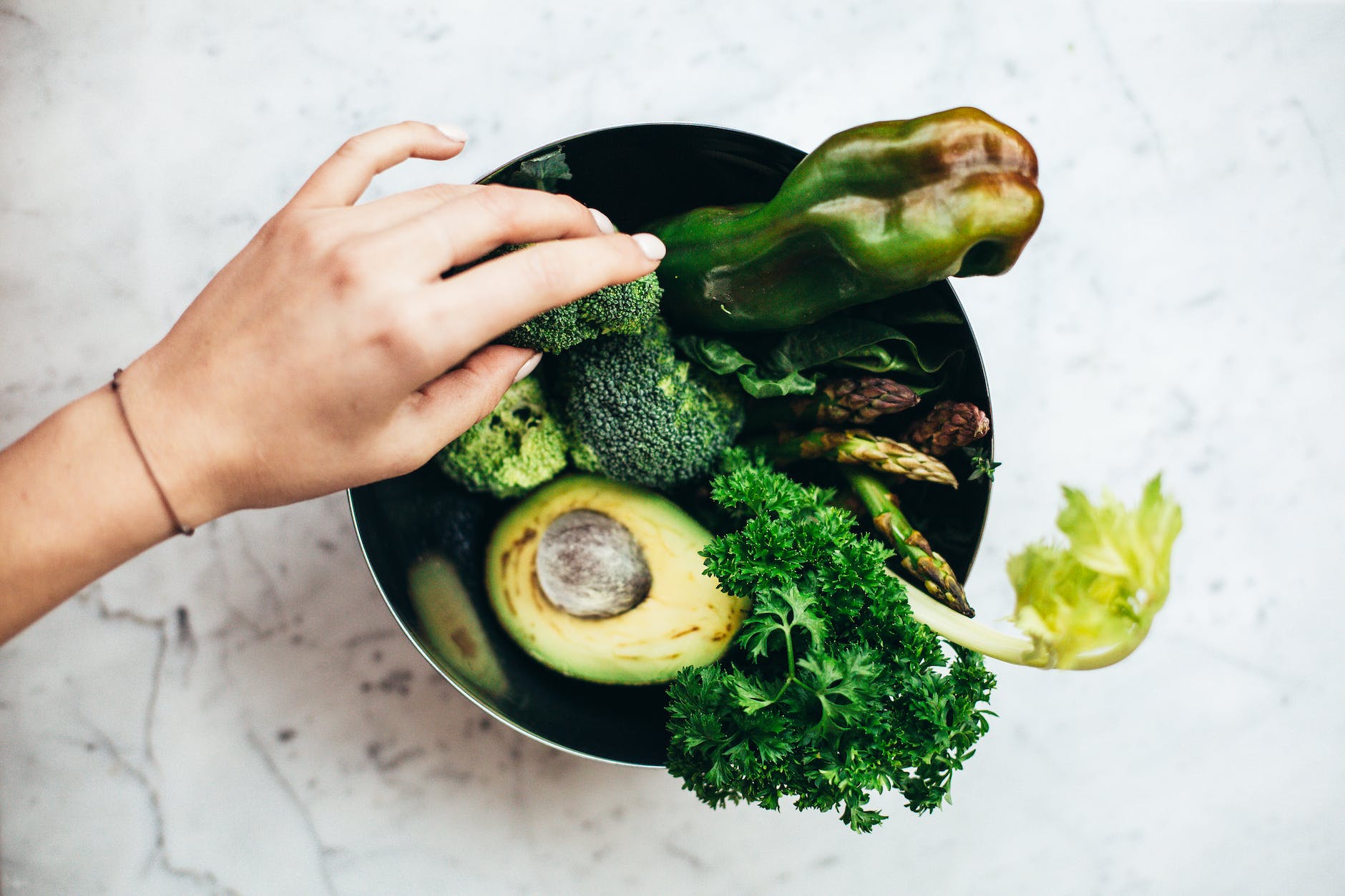
Probiotics are our healthy gut bacteria, and prebiotics are the foods that enables them to thrive. Fibre is a prebiotic and it is part of a plant’s cellular structure. If you want to get fibre naturally, the most efficient way to do it is through eating more plants. One of the most extensive studies on microbes, published by Dr. Knight in 2017, shows that the single most significant predictor of a healthy gut microbiome is incorporating a diverse range of plants into the diet.
Dr. Bulsiewicz outlines an easy way to incorporate more plants into our diet through following the acronym, F-GOALS. This acronym stands for: fruits and fermented foods; greens and grains; omega-rich nuts and seeds; aromatics; legumes; and sulforaphanes. And although it can be intimidating to begin with, here is a list of plants to get you started. You can use either frozen or fresh fruits and vegetables. Dry legumes (beans), seeds and nuts are an inexpensive and accessible option and they add fibre-rich protein into the diet; these items can be purchased from most bulk foods or grocery stores. Be careful when using canned options, however, as there is often added sugar and salt, so read the ingredients carefully.
Fermented foods, such as kimchi, sauerkraut, miso and kombucha, are rich in healthy bacteria, or probiotics. Almost every culture on earth has fermented foods as part of their food tradition because it is excellent for health and it is an efficient preservation method. Here is a link to ten fermented foods that you can easily make at home.
Greens and Grains
When it comes to grains, Dr. B encourages dropping the refined options, such as white rice and highly processed bread, and incorporating whole-grain options. One particular ten-year study of dietary patterns examined 37 different food groups and showed that whole grain consumption had the most potent anti-inflammatory effect on the body.
Omega-3
The most efficient way to get more Omega-3 is by incorporating more seeds into your diet, such as flax, chia, and hemp seeds. Seeds are easy to incorporate into salad, porridge, smoothies or just by sprinkling onto a meal for texture.
Aromatics
Aromatics such as onions, leeks and garlic contain an enzyme called allianase, which is anti-viral, anti-fungal, and anti-parasitic. In order to activate this enzyme, Dr. B suggests using the “Chop and Stop” method. Chop up your garlic or onions and wait ten minutes before adding it to the frying pan.
Legumes
Legumes are packed with fibre. A cup of green peas contains 7 grams of fibre and lentils 16 grams. If you combine a legume with a whole-grain, such as brown rice, it creates a complete protein.
Sulforaphane
Sulforaphane is unique to the cruciferous family of vegetables, such as broccoli, Brussels sprouts, and cabbage. He especially encourages the consumption of broccoli sprouts, which you can grow at home for a very low cost.
I found this book to be really informative and I appreciated the recipes and resources provided. Dr. B lays out the complex science behind gut health in a simple, factual and accessible manner. He also recently released a more extensive cookbook, which helps to put the F-GOAL concepts into action. Both books should be available to borrow through your local library. If not, there are also a lot of great free resources available online providing delicious, plant-based recipes, such as this one.
If you do not have time to read the books, or cannot easily access them, I highly recommend listening to this great interview with Dr. B and Rich Roll. It provides a comprehensive summary of the key concepts and why they matter to your health and well-being.
“Earth’s crammed with heaven, And every common bush afire with God, But only he who sees takes off his shoes, The rest sit round it and pluck blackberries.“
“Be drawn to the mystery and magnificence of the universe. Be awed by the beauty and splendour of this earth we live upon. Hold sacred, pay homage, and bear witness to the everyday wonders of life. Honour what has passed before us. Hope that what is ahead fulfills our destiny, and your journey will have meaning and purpose and your stay here will have counted for something. Your eyes may be small but what they see is enormous. Look straight ahead at life and do not flinch.” ~ “Dadisms”, Jackson, Salt Spring Island, Spring 2017.
This recent video from the Holistic Psychologist really impacted me. I had never before heard a love relationship described as a trauma bond. It explains why some couples stay together, despite being an unhealthy combination. I can personally relate to it as it reflects the roles that my ex-husband and I played during the latter part of our marriage. It is invaluable to gain awareness and understanding of how familiar patterns from childhood can show up in our adult lives and attachments. It reveals the complexity of human relationships and confirms we are not isolated and alone in our disfunction. More importantly, with conscious attention, practice and awareness, it gives hope that it is possible to prevent repetition of the cycle in future relationships.





 Breath by Breath